
Temporary Grain Storage: When It Works And When It Creates Risk
Article Overview:
Temporary grain storage can provide flexibility during high-yield harvests or when permanent capacity is exceeded. However, without proper planning, airflow, and monitoring, it can introduce significant risk. This article explains when temporary grain storage makes sense, where it can create problems, and how to manage it effectively in Western Canadian conditions.
What Is Temporary Grain Storage?
Temporary grain storage refers to short-term solutions used when existing bin capacity is not sufficient. These systems are typically used during peak harvest periods or when expansion is planned but not yet complete.
Common forms of temporary storage include grain bags, covered piles, and other field-based storage methods. These options allow producers to manage large volumes quickly, but they do not provide the same level of protection or control as permanent structures.
Temporary grain storage is not designed for long-term holding. It is a short-term strategy that requires careful management to avoid quality loss.
When Temporary Grain Storage Makes Sense
Temporary grain storage can be a practical solution under the right conditions. It is most effective when used as part of a planned system rather than a last-minute response.
Situations where temporary storage works well include:
Higher-than-expected yields during harvest
Delays in grain movement or delivery schedules
Planned expansion of permanent storage capacity
Short-term staging before drying or transfer
In these scenarios, temporary storage provides operational flexibility and helps prevent bottlenecks during harvest.
The Risks Of Temporary Grain Storage
While temporary grain storage offers flexibility, it comes with limitations that must be managed carefully.
Unlike permanent bins, temporary systems often lack controlled aeration, consistent airflow distribution, integrated monitoring systems, and protection from weather and environmental exposure, increasing the risk of spoilage and grain quality loss.
Managing temporary setups safely is critical, as outlined in Grain Storage Safety Systems: Reducing Risk During Storage And Handling, especially when working around piles, bags, and active grain movement.
These limitations increase the risk of moisture buildup, temperature fluctuations, and spoilage. Grain stored in bags or piles is more vulnerable to condensation, wildlife damage, and uneven drying conditions.
Without proper oversight, temporary storage can quickly lead to quality degradation and financial loss.
Airflow And Moisture Control Challenges
Airflow is one of the most critical factors in maintaining grain quality. In permanent storage systems, aeration floors and fans help regulate temperature and moisture.
In temporary grain storage, airflow is often limited or inconsistent. This makes it more difficult to manage internal conditions, especially during temperature swings common in Western Canadian climates.
Moisture migration can occur rapidly when temperature differences develop within stored grain. Without proper airflow, these conditions create hotspots and increase the likelihood of mold or spoilage.
Understanding how moisture behaves is essential, as outlined in The Science of Moisture Migration: Protecting Grain Quality During Storage, to reduce risk when using temporary storage methods.
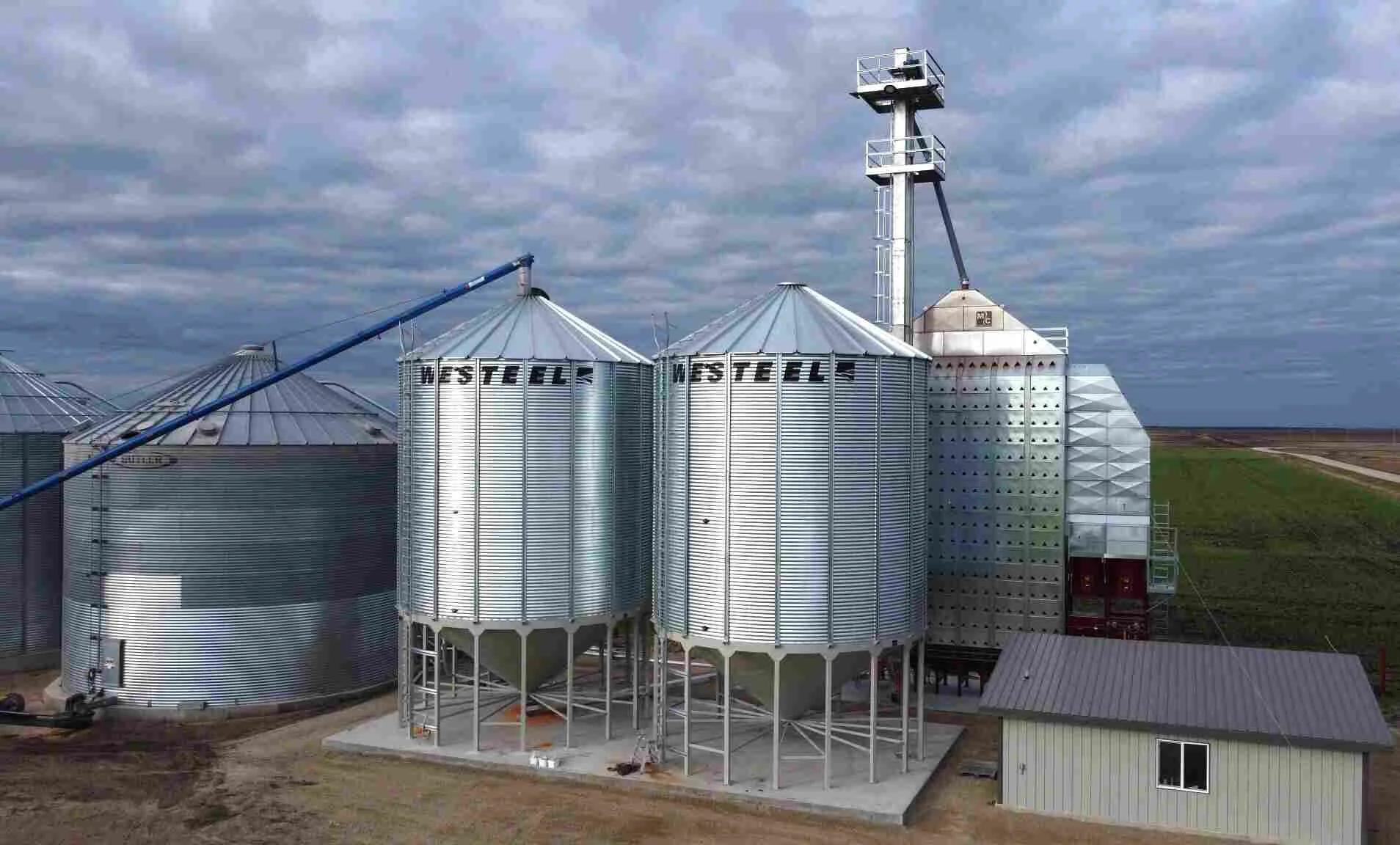
Grain storage system with bins and drying equipment illustrating airflow and moisture control challenges in agricultural grain storage systems.
The Importance Of Monitoring In Temporary Storage
Monitoring becomes even more important when using temporary grain storage. Without built-in systems, producers must rely on frequent checks and proactive management.
Temperature changes inside stored grain are often not visible from the surface. Monitoring helps detect early signs of heating before spoilage spreads.
While temporary storage does not always support full monitoring systems, increased inspection frequency is critical to reducing risk.
Short-Term Use Vs Long-Term Risk
Temporary grain storage is most effective when used for short durations. The longer grain remains in temporary conditions, the greater the exposure to risk.
Short-term use allows producers to move grain efficiently during harvest and transfer it into permanent storage or delivery channels as capacity becomes available.
Extending storage time increases the likelihood of moisture buildup, temperature instability, grain degradation, and increased handling losses, all of which contribute to reduced grain quality and overall value.
Temporary storage should always be viewed as a bridge, not a destination.
Planning Ahead To Reduce Risk
The most effective use of temporary grain storage comes from planning ahead. Producers who anticipate capacity challenges can design workflows that minimize risk.
A well-planned system reduces reliance on temporary storage, as discussed in Efficient Grain Handling Systems: Ideas to Streamline Your Operation, by improving grain flow and overall handling capacity.
This includes:
Prioritizing grain movement timelines
Monitoring moisture levels before storage
Using temporary storage only for appropriate crops
Planning for quick transfer into permanent systems
Temporary solutions are most successful when they are integrated into a broader grain handling strategy rather than used in isolation.
Making The Right Decision For Your Operation
Temporary grain storage can be a valuable tool when used correctly, but it requires discipline and awareness of its limitations.
Producers who understand when to use it and how to manage it effectively can avoid costly mistakes. The goal is not to eliminate temporary storage, but to use it strategically as part of a complete system.
If you are planning for increased capacity or evaluating storage options, talk to the Wall Grain team about designing a system that balances flexibility with long-term performance under real Western Canadian conditions.