
Types Of Grain Storage Structures And How To Choose The Right One

Article Overview:
Choosing the right grain storage structure directly impacts efficiency, grain quality, and long-term scalability. This article explains the main types of grain storage structures, compares their advantages and limitations, and helps producers determine which option best supports their operation in Western Canadian conditions.
What Are The Main Types Of Grain Storage Structures?
Grain storage is not a one-size decision. The right structure depends on crop type, storage duration, handling system design, and future expansion plans.
The most common types of grain storage structures used on farms include:
Flat bottom grain bins
Hopper bottom bins
Smooth wall grain bins
Grain silos (commercial or large-scale systems)
Temporary storage solutions such as grain bags
Each structure serves a specific purpose. Understanding how they perform in real operating conditions is key to making the right investment.
Flat Bottom Grain Bins: High Capacity And Long-Term Storage
Flat bottom bins are the most widely used grain storage structure for long-term, high-capacity storage. They are designed to hold large volumes of grain and are typically paired with aeration floors, fans, and monitoring systems.
These bins are ideal for producers storing grain over extended periods, particularly through winter and into spring. Their larger capacity supports efficient harvest intake and long-term inventory management.
However, flat bottom bins require a full unload system and proper aeration design to perform effectively. Without correct airflow and monitoring, the risk of moisture migration and hotspots increases.
Monitoring plays a critical role in maintaining grain quality during storage, as explained in Grain Bin Temperature Monitoring Systems: Why Early Detection Matters, especially when managing temperature and preventing hotspots inside the bin.
Hopper Bottom Bins: Flexibility And Cleanout Efficiency
Hopper bottom bins are designed for quick unloading and efficient grain turnover. The conical base allows grain to flow out without requiring a sweep system, making them well suited for shorter-term storage or frequent movement.
These bins are commonly used for staging grain before drying, transferring between systems, or handling specialty crops that require frequent movement.
While hopper bins offer convenience, they typically have smaller capacities compared to flat bottom bins and higher cost per bushel. They are best used as part of a broader storage system rather than a standalone solution for large-scale operations.
Smooth Wall Grain Bins: Clean Flow And Structural Strength
Smooth wall grain bins are designed for efficient grain flow and durable performance, making them a practical option for specific storage and handling applications. Their smooth interior surface reduces friction, allowing grain to move more freely during unloading and minimizing buildup along bin walls.
Smooth wall bins are often used in operations where cleanout efficiency, controlled flow, and durability are priorities. When integrated into a complete grain handling system, they support reliable operation and streamlined grain movement.
Grain Silos: Commercial-Scale Storage Systems
Grain silos are often used in commercial or high-throughput operations where large volumes must be handled efficiently. These structures are engineered for continuous intake and discharge, often integrated with advanced conveying and drying systems.
Silos support automated grain handling and can be designed for high-speed movement and conditioning. However, they require significant upfront investment and detailed engineering.
For most on-farm operations, silos are part of larger system builds rather than a primary storage solution.
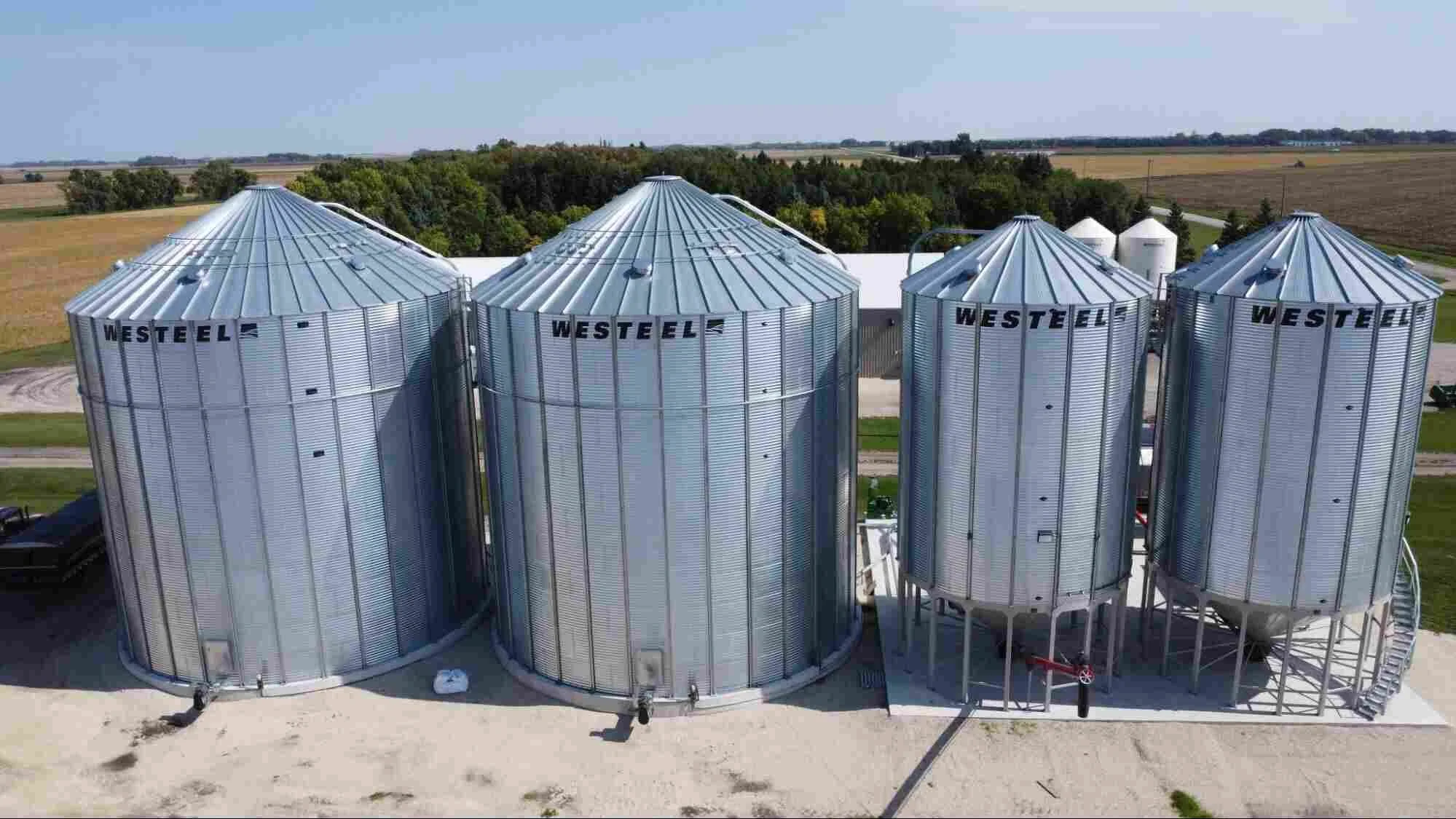
Commercial-scale storage systems featuring multiple large steel grain bins and silos used for high-capacity agricultural grain storage on a farm.
Temporary Storage: Short-Term Flexibility
Temporary storage solutions, such as grain bags, provide flexibility during peak harvest periods. They are often used when permanent storage is at capacity or when expansion is planned but not yet completed.
While grain bags offer convenience and lower upfront cost, they require careful monitoring and management. Exposure to weather, wildlife, and moisture increases risk compared to permanent structures.
Temporary storage is best used as a supplemental solution rather than a long-term strategy.
How To Choose The Right Grain Storage Structure
Selecting the right structure depends on how the system will be used over time, not just immediate needs. A well-designed storage plan considers both current capacity and future growth.
Key factors to evaluate include:
Storage duration and crop type
Required capacity and throughput
Integration with dryers and handling systems
Aeration and monitoring requirements
Expansion plans and long-term scalability
Flat bottom bins are typically the foundation for long-term storage, while smooth wall bins provide efficient flow and cleanout for specialized applications. Hopper bins support operational flexibility, silos serve high-capacity commercial needs, and temporary storage fills short-term gaps.
The right combination of these structures creates a balanced, efficient system.
Planning For Expansion And System Integration
Grain storage structures should never be planned in isolation. Their performance depends on how they integrate with the full system, including handling equipment, drying capacity, and monitoring technology.
A system designed for expansion allows producers to add capacity without disrupting existing workflows. Proper layout planning ensures that new bins, conveyors, and dryers connect efficiently as operations grow.
Integration also reduces bottlenecks, improves grain flow, and supports consistent conditioning across the system.
Understanding how moisture moves within stored grain is essential, as outlined in The Science of Moisture Migration: Protecting Grain Quality During Storage, to prevent spoilage and maintain consistent grain quality over time.
Making The Right Investment For Long-Term Performance
Each of the main types of grain storage structures offers specific advantages, but long-term success depends on how well those structures are engineered and integrated.
Producers who plan for airflow, handling efficiency, and future expansion avoid costly retrofits and operational limitations later on. A well-designed system supports consistent grain quality, efficient harvest intake, and reliable long-term storage.
If you are evaluating grain storage options, speak with the Wall Grain team to design a system that aligns with your operation, supports growth, and performs reliably under real Western Canadian conditions.
Frequently Asked Questions
-
No. Some crops are more sensitive to moisture and airflow than others, so the type of structure matters as much as the crop itself. Oilseeds, for example, often need tighter aeration control than cereal grains, which is why matching crop type to structure design is a key step before choosing among the types of grain storage structures available.
-
Permanent steel structures such as flat bottom and smooth wall bins can last several decades with proper maintenance, while temporary options like grain bags are designed for single-season use. Lifespan is one of the clearest cost factors to weigh when comparing options long-term.
-
It depends on your current layout. If your existing bins have room for additional units and your handling system can support more volume, expanding is usually cheaper than starting a new site. But if space, access, or system design is limiting you, adding a different structure type may solve problems that simply expanding can't.
-
Every structure has strengths and limitations, so relying on just one often leaves gaps – whether that's capacity, turnover speed, or flexibility during harvest. Combining different types of grain storage structures lets producers cover long-term volume, quick-turn staging, and short-term overflow all within one balanced system.