
Grain Storage Safety Systems: Reducing Risk During Storage And Handling
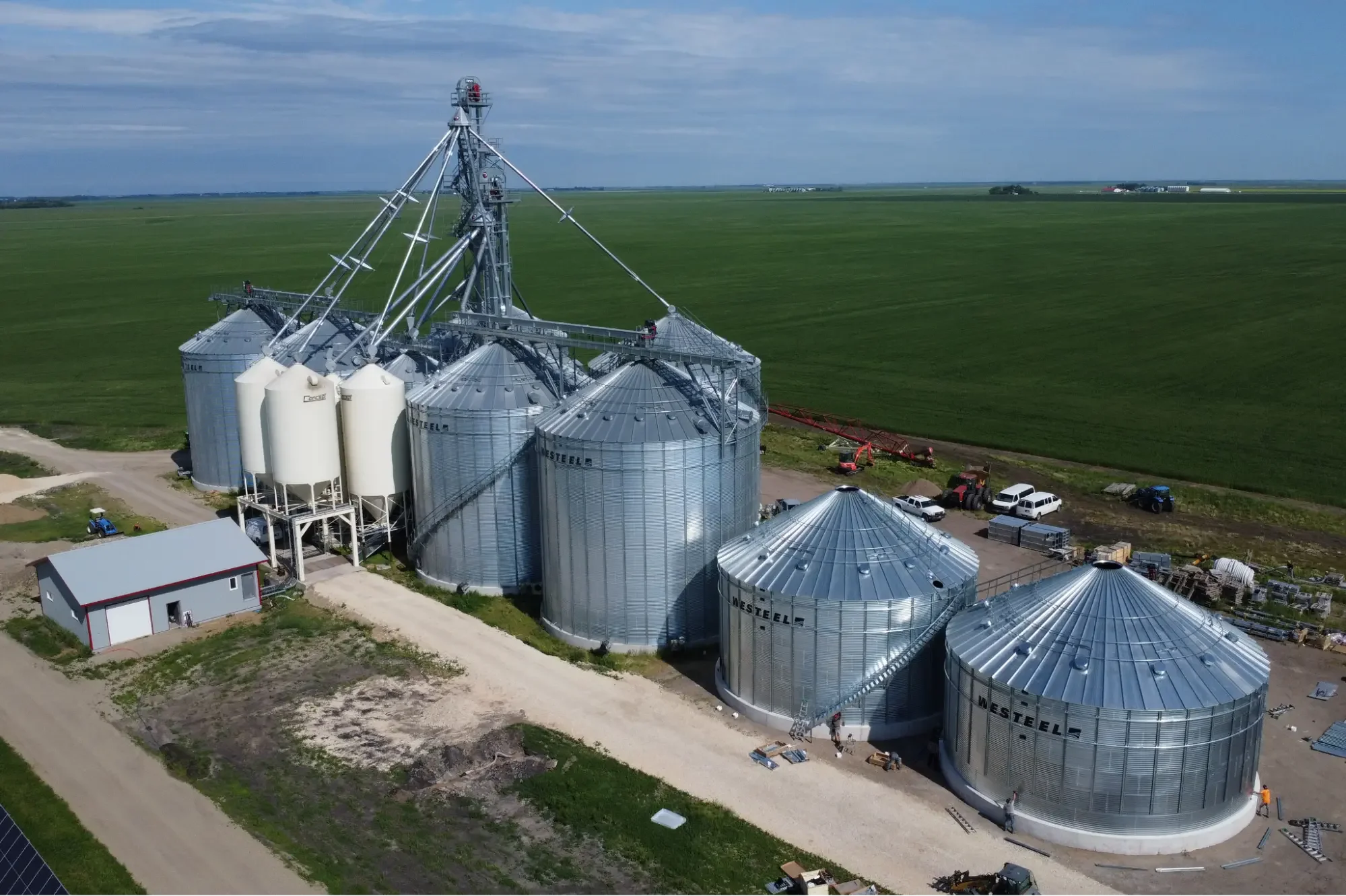
Article Overview:
Grain storage safety systems play a critical role in protecting producers, employees, and operations during storage and handling. From confined space risks inside bins to equipment access and airflow hazards, modern systems are designed to reduce preventable incidents. This article explains key safety considerations in Western Canadian grain operations and how integrated safety solutions lower operational risk.
Why Grain Storage Safety Systems Matter
Grain storage environments present serious hazards. Large bin capacities, mechanical handling equipment, and long storage cycles increase exposure to risks that are often underestimated.
Entrapment, falls, confined space exposure, and equipment-related injuries remain ongoing concerns across the industry. Many incidents occur not because of neglect, but because systems were not designed with safety built in from the start.
Grain storage safety systems reduce risk by combining engineering controls, monitoring technology, and safer access design into one integrated approach.
Understanding Confined Space Risks In Grain Bins
Grain bins are classified as confined spaces. Limited entry and exit points, restricted airflow, and shifting grain surfaces create a hazardous environment.
When grain bridges or crusts, workers may enter bins to break up blockages. This exposes them to engulfment risk. Flowing grain can behave like quicksand, pulling a person under in seconds.
Modern grain storage safety systems reduce this risk by minimizing the need for bin entry. Temperature and condition monitoring allow operators to detect problems early, preventing the formation of severe crusting or spoilage that requires manual intervention.
Design features such as properly positioned manways, interior ladders, and safety anchor points further reduce risk when entry is unavoidable.
Airflow And Ventilation Safety Considerations
Aeration fans and ventilation systems are essential for maintaining grain quality. However, airflow systems also introduce safety considerations.
Improperly managed airflow can create pressure differentials inside bins. In extreme cases, this may contribute to structural stress or unexpected grain movement. Additionally, exposure to dust and airborne particles during aeration increases respiratory risks.
Grain storage safety systems account for controlled airflow design. Proper fan sizing, balanced ducting, and automated controls reduce the need for manual adjustments and repeated exposure.
Monitoring systems also help ensure fans operate only when necessary, limiting unnecessary worker exposure during maintenance or inspections.
Safe Equipment Access And Fall Protection
Grain bins and handling equipment often require elevated access for inspection and service. Ladders, platforms, and roof hatches introduce fall hazards if not properly designed.
Modern safety-focused installations prioritize:
Engineered ladder systems with cages
Non-slip platforms and service areas
Guardrails and secure anchor points
Clearly defined access routes
Lockout procedures for moving equipment
By integrating these elements during design and installation, producers reduce reliance on temporary or improvised access solutions.
Safe access is not an accessory. It is a core component of responsible grain storage system design.
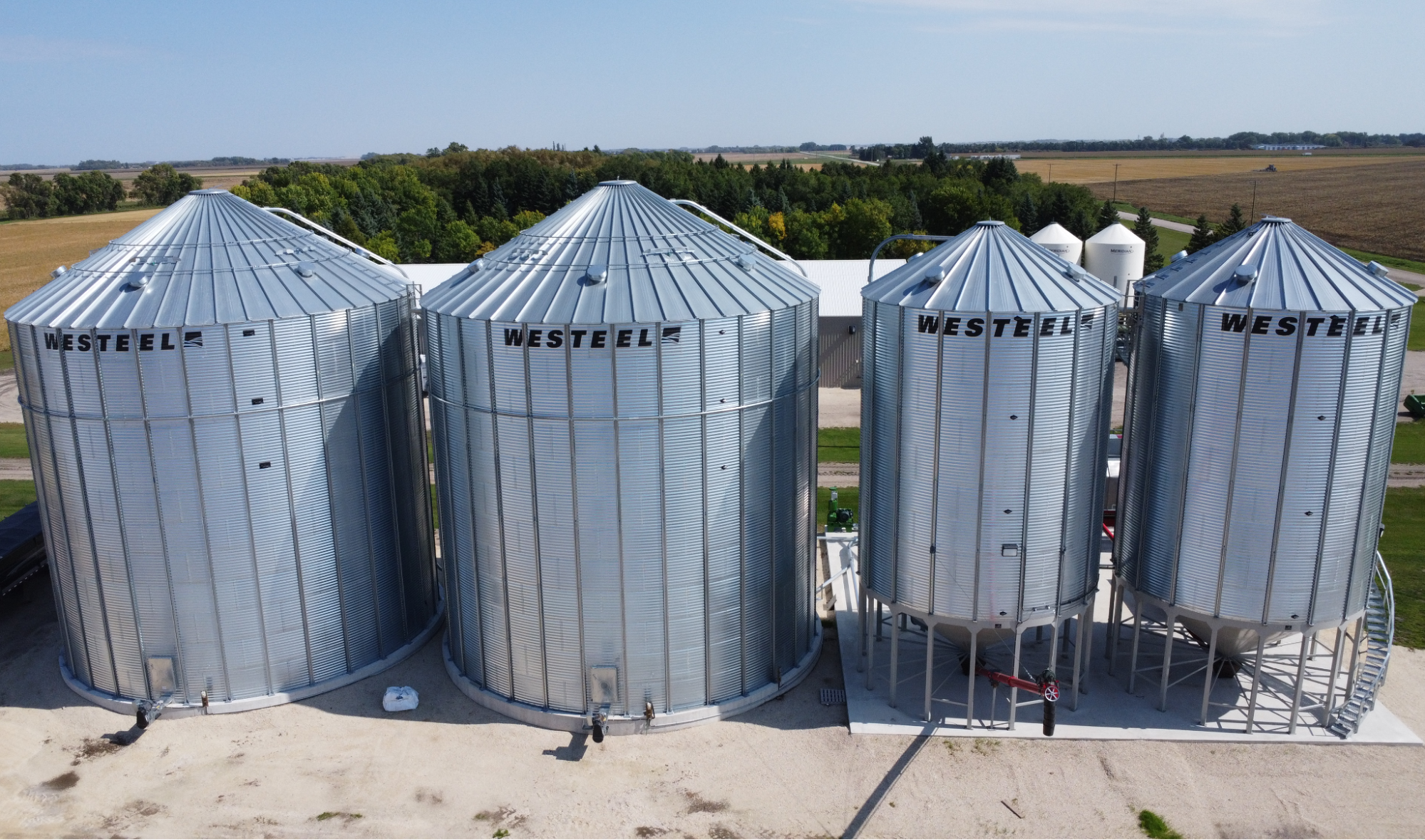
Large galvanized steel silos equipped with modern grain storage safety systems designed to facilitate safe inspection and reduce fall risks.
Reducing Risk In Grain Handling Equipment
Augers, conveyors, and bucket elevators move large volumes of grain efficiently, but they also create mechanical hazards.
Exposed moving parts, pinch points, and high torque equipment increase injury potential. Grain storage safety systems address these risks through equipment guarding, emergency shutoffs, and clearly labeled controls.
Integrated system design ensures handling equipment aligns with storage capacity and workflow. When systems are mismatched, operators may be forced into unsafe adjustments or rushed procedures during peak harvest periods.
Well-planned layouts reduce congestion, improve traffic flow, and support safer day-to-day operation.
Monitoring And Automation As Safety Tools
Technology has significantly improved storage safety. Remote monitoring systems reduce the need for physical inspection inside bins. Automated aeration and condition tracking minimize manual intervention.
When temperature and moisture conditions are visible in real time, operators can respond early without climbing bins or entering confined spaces. This evolution demonstrates how automated grain management systems are changing on-farm storage by reducing manual intervention, improving real-time visibility, and lowering overall exposure to high-risk storage activities.
This reflects how modern grain storage safety systems combine monitoring and automation to reduce physical exposure while improving operational control.
Automation does not replace safe work practices, but it reduces the frequency of high-risk activities.
Planning For Long-Term Safety In Western Canadian Conditions
Western Canadian operations face unique challenges. Long winters, wide temperature swings, and extended storage periods increase structural stress and maintenance demands.
Ice accumulation on ladders and platforms, frozen components, and limited daylight during winter months all increase hazard exposure.
Grain storage safety systems must account for these environmental realities. Durable materials, proper drainage, weather-resistant electrical components, and thoughtful equipment placement all contribute to safer year-round operation.
Planning for safety during installation is more effective than retrofitting solutions after incidents occur.
Building A Safety-First Storage Strategy
Safety should be integrated at every stage of storage system development. From airflow design to monitoring integration and safe equipment access, each component plays a role in reducing risk.
Grain storage safety systems are most effective when they are part of a comprehensive approach that considers system design, worker procedures, monitoring capabilities, structural access, and long-term maintenance planning.
When safety is engineered into the system rather than added later, producers protect both their people and their investment.
Reducing risk during storage and handling is not only about compliance. It is about building operations that function efficiently, reliably, and safely across every season.
If you are upgrading your grain handling or storage infrastructure, speak with the Wall Grain team about implementing grain storage safety systems that prioritize protection alongside performance.