
Article Overview:
A grain bin temperature monitoring system helps producers detect internal heating before spoilage spreads. In Western Canadian conditions, where grain is often stored through long winters and into spring, early detection is critical. This article explains how these systems work, why hotspots develop, and how monitoring protects grain quality and long-term profitability.
What Is A Grain Bin Temperature Monitoring System?
A grain bin temperature monitoring system is a network of sensors installed vertically inside a grain bin to measure internal temperatures at multiple depths. These sensors are typically attached to cables suspended from the roof and positioned strategically throughout the bin.
The system connects to a control panel or digital interface that displays temperature readings in real time. Many systems also integrate with remote platforms, allowing producers to monitor conditions from a farm office or mobile device.
Instead of guessing what is happening inside the grain mass, producers gain measurable data that reveals temperature trends before visible damage occurs.
How A Grain Bin Temperature Monitoring System Works
Grain naturally respires in storage. Even when properly dried, biological activity continues at a low level. If moisture levels are uneven or fines accumulate in pockets, localized heating can begin.
A grain bin temperature monitoring system identifies these changes by detecting subtle increases at specific depths within the bin. When temperatures exceed preset thresholds, the system alerts the operator.
Because the sensors are distributed vertically, the system can pinpoint where the issue is developing. This allows producers to respond quickly with targeted aeration rather than running fans blindly or discovering the problem at unload.
Why Early Detection Of Hotspots Is Critical
Hotspots rarely remain small. Once heating begins, microbial activity accelerates. Moisture increases in that localized area, which raises temperature further and expands the affected zone.
In Western Canada, long storage periods amplify this risk. Grain harvested in fall may remain in storage for months while outside temperatures fluctuate dramatically. Large bin capacities increase the amount of grain at risk if heating goes unnoticed.
Without a grain bin temperature monitoring system, spoilage is often discovered too late. Surface inspections and occasional probing do not reveal what is happening deep within the bin. By the time crusting or odor appears, quality loss has already occurred.
Early detection allows intervention before spoilage spreads through the grain mass.
Understanding Moisture Migration In Western Canadian Conditions
Temperature differences inside a bin cause natural air movement. Warm air rises and cool air sinks. During winter, the grain near the bin wall cools faster than the grain at the center.
As warm air rises through the core and meets colder grain near the top, condensation can occur. This often leads to moisture accumulation near the upper center of the bin. Over time, this area becomes vulnerable to heating and mold development.
This reflects the science of moisture migration, where temperature differences inside the bin drive air movement that redistributes moisture and creates concentrated zones of spoilage risk if not properly managed.
A grain bin temperature monitoring system helps identify uneven cooling patterns and temperature gradients that signal moisture migration. Producers can then operate aeration systems strategically to equalize conditions before problems develop.
Monitoring is not just about reacting to heat. It is about maintaining uniform storage conditions throughout seasonal changes.
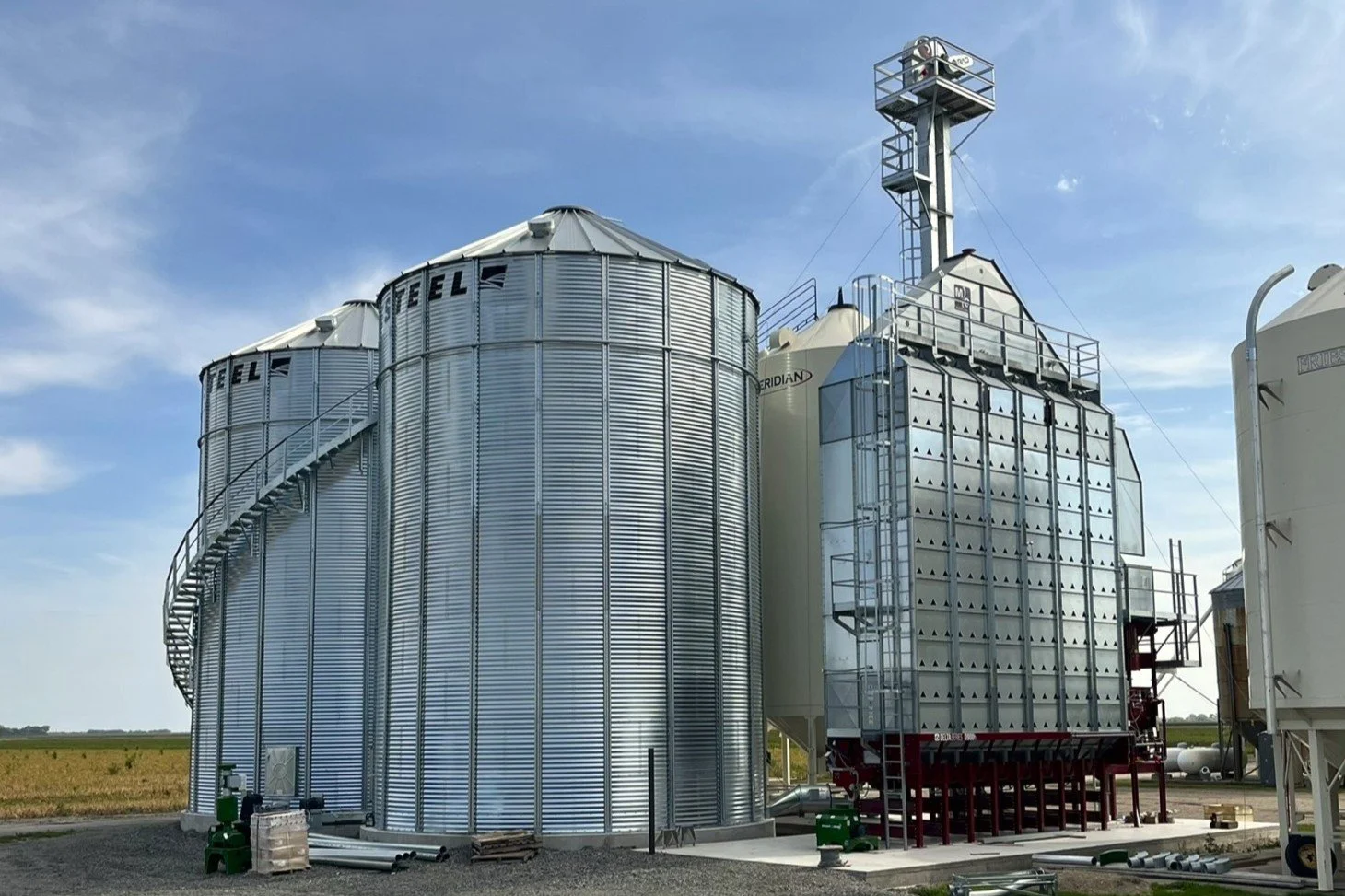
Large galvanized steel storage silos and a grain dryer equipped with a grain bin temperature monitoring system to prevent moisture migration in Western Canadian farming conditions.
Reducing Spoilage Risk Through Continuous Monitoring
Manual checks provide only limited information. Climbing a bin to check surface grain temperature does not reflect internal conditions. Pulling a small sample from one area does not represent the entire bin.
Continuous monitoring provides a complete picture. Producers can track temperature trends over time, observe how the bin responds to weather changes, and adjust aeration accordingly.
The practical advantages include:
Early identification of developing hotspots
Data-driven aeration timing
Reduced energy use from unnecessary fan operation
Improved grain quality preservation
Greater confidence during long-term storage
With continuous monitoring, storage becomes proactive instead of reactive.
Integration With Modern Grain Management Systems
Many grain bin temperature monitoring systems integrate with broader grain management platforms. These systems allow producers to oversee multiple bins from a single interface.
Remote monitoring reduces the need for manual inspection, particularly during harsh winter conditions. Alerts can be delivered directly to a mobile device, enabling quick response even when operators are off-site.
When integrated with aeration controls, monitoring systems can automate fan operation based on temperature data rather than fixed schedules. This improves efficiency and helps maintain consistent grain conditions across multiple storage units. This shift reflects how automated grain management systems are changing on-farm storage by moving producers from reactive monitoring to data-driven, integrated control of temperature, airflow, and overall grain condition.
When Producers Should Consider Installation
The most efficient time to install a grain bin temperature monitoring system is during new bin construction. Cables can be positioned precisely, and integration with other systems can be planned from the beginning.
However, many existing bins can be retrofitted successfully. Monitoring becomes especially valuable when bin sizes increase or when grain is stored for extended periods.
As operations expand, the scale of potential loss grows. Monitoring protects larger inventories and reduces uncertainty during storage.
Protecting Grain Quality With Proactive Management
A grain bin temperature monitoring system provides visibility into the part of storage that cannot be seen. It allows producers to detect problems early, manage airflow strategically, and preserve grain quality through long winters and fluctuating temperatures.
In Western Canadian conditions, where extended storage is common and environmental changes are significant, early detection is essential. Monitoring supports better decision-making, reduces spoilage risk, and strengthens long-term profitability.
Grain quality does not decline overnight without warning. With the right monitoring system in place, producers can see those warnings early and respond before quality and value are compromised.
If you are planning new storage or upgrading existing bins, talk to the Wall Grain team about integrating a grain bin temperature monitoring system that protects your investment from the inside out.