
How Automated Grain Management Systems Are Changing On-Farm Storage
Article Overview:
Automated grain management is reshaping how producers across Western Canada store and protect their crops. Instead of relying solely on manual checks or reactive problem solving, today’s systems use continuous data, automated controls, and real time insight to maintain grain quality throughout storage. This article explains how automated grain management works, why producers are adopting these tools, and how technologies such as GrainX and OPI provide some of the best grain bin monitoring systems available for long term safety and efficiency.
What Is Automated Grain Management And How Does It Work?
Automated grain management refers to monitoring and control systems that gather real time data from inside grain bins and use that information to maintain safe storage conditions. At its core, the system measures temperature, moisture, and airflow. These values determine grain stability and influence whether aeration should be used to prevent spoilage. Unlike traditional manual checks, automated systems track these conditions continuously and identify issues long before they become visible.
Automated systems often include temperature cables, moisture sensors, fan controls, and software that brings all data into one dashboard. These tools allow producers to see exactly what is happening inside each bin. The ability to detect hotspots, moisture migration, or unexpected temperature rises gives farmers the information needed to keep grain safe and prevent losses. New cables being released in 2026 will expand this capability even further by reading live grain levels and detecting CO2, which appears before grain begins to heat. This gives producers earlier warning of developing issues and accurate insight into how much grain, and therefore how much value, is stored in each bin. For Western Canadian operations managing multiple bins, this level of insight is essential.
Why Are Producers Turning To The Best Grain Bin Monitoring Systems?
Producers across Manitoba, Saskatchewan, and Alberta are adopting automated systems because grain conditions can change quickly inside a bin. When moisture pockets form or temperatures shift, spoilage can spread through the grain mass faster than many expect. Even with regular manual checks, it is difficult to detect issues occurring several feet below the surface. The best grain bin monitoring systems solve this challenge by providing detailed readings throughout the entire bin.
These systems also support larger operations where the volume of stored grain makes manual checks impractical. A single bin can represent hundreds of thousands of dollars in crop value. Automated monitoring reduces risk and provides consistent oversight across every storage structure on the farm. For farms managing multiple crop types with different storage requirements, automated systems offer the precision needed to manage each crop safely.
How Do Tools Like GrainX And OPI Improve On-Farm Storage Insight?
Systems such as GrainX and OPI use reliable sensors and software to give producers a clear picture of internal bin conditions. These platforms provide frequent data updates, trend tracking, and alerts that notify operators when conditions change. Instead of guessing whether a bin is warming or cooling, producers can pinpoint exactly where airflow is required.
Automated grain management systems typically allow farmers to view:
Temperature readings across multiple levels
Moisture conditions and migration patterns
Fan run times and aeration effectiveness
Grain stabilization trends over time
Alerts for rising temperatures or unsafe moisture levels
This information helps producers make accurate decisions about aeration and handling. It also provides the documentation needed to understand how grain behaved during storage and whether adjustments may be needed for future seasons.

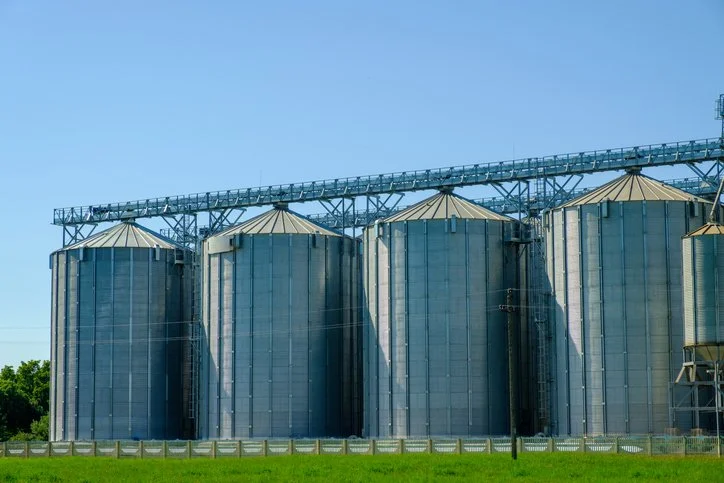
Industrial facility with steel silos, demonstrating how the structural integrity of grain storage bins influence moisture migration to preserve crop quality.
How Does Automation Improve Aeration Efficiency And Grain Quality?
Aeration is essential for controlling temperature and maintaining grain quality. Without accurate data, aeration becomes a trial and error process. Automated grain management takes the guessing out of the equation. By linking monitoring data with aeration controls, producers can run fans only when conditions support effective cooling or drying. This reduces energy usage and helps stabilize grain efficiently. Some systems, such as Grain X Command, also help producers manage shrink by monitoring outside moisture conditions through a dedicated weather station and running fans only when equilibrium is ideal for conditioning or hydrating grain. This narrow window often occurs during harvest when farmers are in the field, which is why automation is so effective in this role.
Automation also helps prevent common storage issues such as condensation, crusting, and moisture migration. When temperature layers shift inside a bin, warm air can rise and condense near the surface. Automated systems identify these trends early, allowing producers to run fans before damage occurs. For Western Canadian climates where temperature swings are common, this level of control is especially valuable.
How Do Automated Systems Improve Safety And Reduce Labour Requirements?
Manual bin checks involve climbing ladders, opening hatches, and working around grain. These tasks carry safety risks, particularly in winter or during windy conditions. Automated grain management reduces the need for repeated physical checks by gathering accurate data from inside the bin. Producers can monitor conditions without entering the structure or climbing to the roof.
Automation also reduces labour requirements. Instead of measuring grain temperatures periodically with handheld probes or visually inspecting grain surfaces, producers can rely on continuous data updates. This is especially helpful for large operations where multiple bins must be checked regularly. Automated systems ensure that no bin is overlooked and that changes in grain condition are identified quickly.
Why Is Automated Grain Management Especially Valuable For Western Canadian Farms?
Western Canadian farms handle large volumes of grain, operate across wide temperature swings, and often manage multiple crop types simultaneously. These factors make automated systems particularly valuable. Cold winters and warm autumn days create rapid temperature changes that influence moisture migration. Automated systems track these internal shifts closely and notify producers when aeration is needed.
Operations in Manitoba, Saskatchewan, and Alberta also store grain for extended periods. Long term storage increases the importance of consistent monitoring because problems can develop slowly over time. Automated systems offer the stability required to protect grain across multiple seasons.
Producers managing wheat, canola, barley, oats, and pulses benefit from crop specific insight as well. Each crop has its own moisture thresholds and temperature behaviors. Automated systems help operators maintain proper conditions for each crop without relying on broad assumptions. Some systems, such as Grain X, use patented algorithms to interpret sensor data for each crop type, allowing the AI to adjust decisions based on the grain’s unique characteristics and storage requirements.
What Should Producers Consider When Evaluating Automated Grain Management Systems?
Choosing the right automated system depends on several factors, including bin size, crop type, monitoring needs, and future expansion plans. Producers should focus on systems that provide accurate readings, reliable data transmission, and easy to interpret dashboards. Installation quality and service also matter. Proper sensor placement ensures the system captures meaningful data from across the grain mass, and dependable support helps keep the system performing as intended through each storage season.
For Western Canadian farms managing high volumes of stored grain each year, automated grain management provides confidence and consistency. By using accurate data and continuous monitoring, producers can protect grain quality, respond quickly to changing conditions, and reduce the risk of spoilage across their operation.
Contact Wallgrain Handling Systems today to discuss the right storage and monitoring solutions for your operation.