
What Is Grain Storage And Why It Matters For Western Canadian Farms
Article Overview:
Grain storage is one of the most important components of modern crop management, especially for producers across Manitoba, Saskatchewan, and Alberta who depend on safe, reliable systems to protect yield quality after harvest. Understanding what grain storage is, how it works, and why it directly affects long-term profitability helps farms operate more efficiently and reduce losses. This article explains the role of on farm grain storage, the advantages of metal grain storage bins, and why producers across Western Canada rely on dependable systems.
What Is Grain Storage And How Does It Protect Your Harvest?
Grain storage refers to the controlled environment where harvested crops are held until they are sold, shipped, or processed. Effective storage protects grain from spoilage, weather exposure, pests, and quality loss caused by temperature fluctuations. Grain continues to breathe after harvest. This makes temperature, airflow, and moisture control essential for preventing spoilage, mold growth, and shrinkage. For Western Canadian conditions, where temperature swings can be extreme, producers require durable systems that maintain grain quality for months at a time.
Modern on farm grain storage combines structural strength with mechanical and digital systems that work together to keep grain safe. Metal grain storage bins provide the durability farmers need in prairie weather. When paired with proper aeration, drying, and monitoring, farms gain complete control over crop condition and long-term quality. This level of protection is often the difference between a profitable year and unexpected quality losses.
Why Does On Farm Grain Storage Strengthen Farm Profitability?
On farm grain storage gives producers control over timing, crop quality, and market decisions. Without dependable storage, farmers are often forced to move grain immediately after harvest when prices may be at their lowest. When grain can be safely held and conditioned, producers gain the ability to sell at stronger prices, batch loads more efficiently, or supply buyers demanding specific moisture or grade requirements. In Western Canada, where harvest conditions can shift quickly, storage is also essential for capturing the crop before snow, heavy rain, or frost damage quality.
Additionally, on farm grain storage helps operations run smoother during peak harvest periods. Safe storage systems allow producers to keep combines moving while grain is dried, conditioned, and transferred efficiently. When paired with reliable handling systems, operators reduce bottlenecks, cut truck wait times, and prevent downtime during the busiest part of the year.
How Do Metal Grain Storage Bins Improve Safety And Long Term Performance?
Metal grain storage bins are the preferred option for Western Canadian producers because they offer structural integrity, long service life, and predictable performance under harsh weather conditions. Metal bins, such as Westeel’s corrugated steel bins, are engineered for wind, snow load, temperature shifts, and years of continuous use. Steel construction also prevents rodent intrusion, provides consistent airflow patterns, and resists corrosion when properly maintained.
Key advantages of metal grain storage bins include:
Long lasting durability that withstands prairie weather and heavy seasonal use
Strong structural design for consistent aeration and moisture management
Compatibility with modern monitoring and conditioning technology
Safer handling and inspection compared to temporary or low strength alternatives
Better grain protection through sealed construction and pest resistance
These factors make steel the standard for commercial and large on farm grain storage operations. When combined with proper foundations, ladders, aeration floors, and monitoring systems, steel bins provide a controlled environment that supports long term grain quality and operational safety.

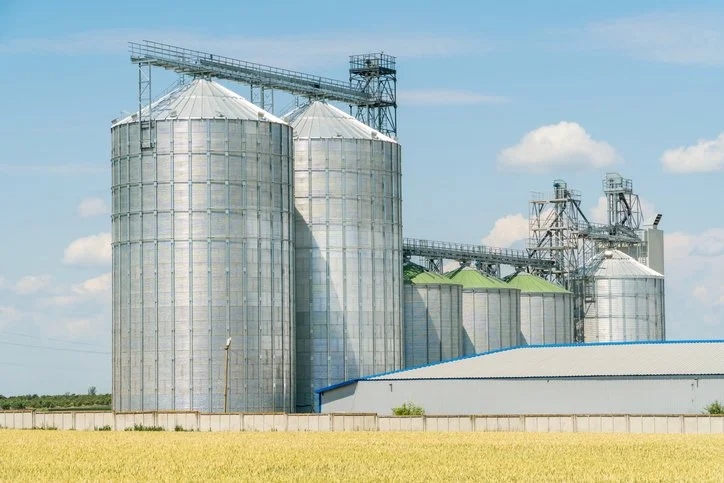
A close-up view of metal grain storage used for protecting harvested grain and maintaining quality after storage.
How Do Monitoring And Drying Systems Support Effective Grain Storage?
Safe grain storage depends on managing temperature, moisture, and airflow from the moment grain enters the bin. Systems such as MC grain dryers, GrainX, and OPI sensors play a critical role by giving producers clear data and consistent results. When grain enters a bin too warm or at a moisture level above safe storage thresholds, spoilage risk increases immediately. Drying grain to target moisture levels ensures the crop reaches the bin in stable condition.
Monitoring systems then take over. Temperature and moisture cables inside the bin allow producers to track conditions in real time. These systems alert operators when hotspots form and provide guidance on when aeration should be used. Fully automated platforms can also make these decisions for the operator, using sensor data to determine exactly when fans should run or shut off. This helps reduce shrink, prevent over-drying, and even condition grain coming out of a dryer more evenly.
For Western Canadian producers managing high volumes and long storage periods, this level of automation and precision is essential for maintaining grade and preventing spoilage.
Why Does Grain Storage Matter Specifically For Western Canadian Farms?
Western Canadian farms rely heavily on grain storage because of their scale, weather patterns, and crop diversity. Producers often manage wheat, canola, barley, oats, and pulse crops on the same operation. Each crop requires different moisture targets, airflow needs, and conditioning strategies. Storage systems must be flexible, durable, and capable of delivering consistent results across all crop types.
Climate also plays a major role. Rapid temperature swings across the prairie provinces create conditions where moisture migration can occur inside bins. Without proper aeration and monitoring, these shifts can cause crusting and spoilage. Metal grain storage bins and well designed handling systems give farms the environmental control necessary to protect grain across long winters and varying seasonal conditions.
Finally, the scale of modern farms means higher volumes of stored grain. Reliable storage enables producers to manage large harvests efficiently while maintaining the quality that buyers expect.
How Can Wallgrain Handling Systems Support Safe, Efficient Grain Storage?
Wallgrain Handling Systems provides complete solutions for producers who want dependable storage, drying, handling, and monitoring systems. With over 40 years of experience, Wallgrain supports farms across Manitoba, Saskatchewan, and Alberta with Westeel grain bins, MC grain dryers, RAD handling systems, and advanced monitoring solutions. Our in house trades ensure proper installation, service, and long term support, giving producers confidence that their storage systems will perform across every season.
Safe, effective grain storage is the backbone of grain quality and long-term profitability. When producers have durable equipment, proper drying, precise monitoring, and dependable service, they gain the confidence to store grain longer and market it smarter. If you want storage systems that protect your crop and your bottom line, reach out to our team. We're here to help you find the best possible solution for your operation.