
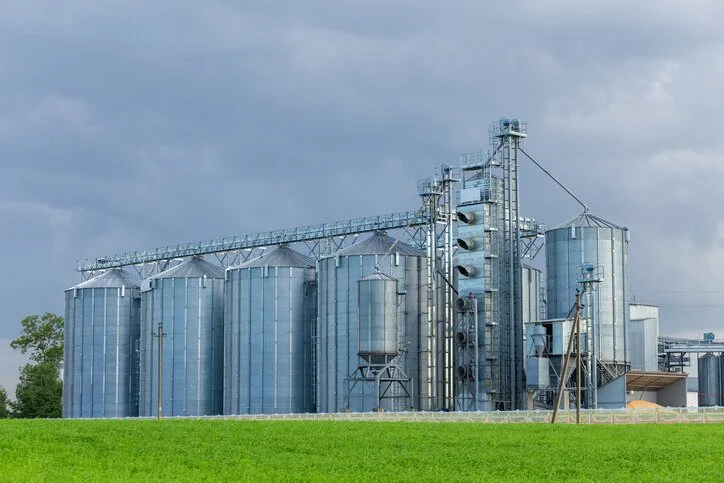
Article Overview:
A grain handling system that performs well today may not be prepared for the demands of tomorrow. Larger combines, higher yields, evolving grain management technology, and changing storage requirements all place greater pressure on existing infrastructure. This article explores how grain handling system planning helps producers prepare for future growth, avoid costly redesigns, and build an operation that remains efficient for years to come.
Why Grain Handling System Planning Matters
Many grain handling systems evolve over time. A new storage bin is added one season, a dryer the next, followed by upgrades to conveyors or monitoring equipment. While these improvements solve immediate challenges, they do not always improve how the operation functions as a whole.
Grain handling system planning looks beyond individual pieces of equipment. It considers how storage, drying, handling, and future expansion work together to create an efficient operation. Taking this approach helps producers avoid bottlenecks, reduce unnecessary grain handling, and make every investment contribute to long-term performance.
Is Your Current System Keeping Up?
Farming has changed significantly over the last decade. Combines have become larger, harvest windows remain tight, and operations are moving more grain in less time. Infrastructure that was well suited to your farm ten years ago may now be limiting productivity.
A good way to evaluate your current system is to ask:
Can the system keep up during peak harvest?
Is drying capacity matched to today's harvest pace?
Does grain move efficiently between receiving, drying, and storage?
Can additional storage be added without redesigning the entire yard?
Is the operation ready for future automation?
These questions help identify whether future investments should focus on individual equipment or the overall system.
Growth Should Be Planned, Not Reactive
The most expensive upgrades are often the ones that happen unexpectedly. When storage reaches capacity or harvest slows because equipment cannot keep up, producers are forced to make quick decisions that may not support long-term goals.
Planning ahead allows improvements to happen in stages while keeping the entire operation aligned with future growth. For example, locating new bins, conveyors, and utility connections with expansion in mind can prevent costly relocation or reconstruction later.
If you're considering future expansion, read Scalable Grain Storage Systems: How to Grow Without Rebuilding to learn how phased growth can reduce costs while keeping your operation flexible.
Prepare Your Operation for Automation
Automation is becoming an important part of modern grain handling. Monitoring systems, automated fan control, and remote management all help producers respond faster to changing storage conditions while reducing manual oversight.
Planning for automation does not mean installing every technology immediately. It means ensuring today's infrastructure can support future upgrades without requiring major changes to your layout or equipment.
When automation is considered during the planning stage, producers have more flexibility to adopt new technology as their operation grows.

Technician using a laptop to monitor automated grain storage equipment as part of grain handling system planning for improved farm efficiency.
Every Component Should Work Together
A grain handling system performs best when every component supports the next. Storage capacity, drying performance, conveying equipment, airflow, and monitoring should work together rather than operate independently.
This is why Grain Handling System Design is so important. Looking at the complete operation instead of individual equipment helps improve harvest flow, reduce handling delays, and create a system that continues to perform as your operation evolves.
Small Improvements Can Create Big Results
Preparing for the future does not always require a complete rebuild. In many cases, targeted improvements can increase efficiency while laying the foundation for future expansion.
Optimizing grain flow, improving airflow, upgrading unloading systems, or adjusting equipment placement can all strengthen overall system performance without replacing every component.
For practical ideas that improve existing infrastructure, read Grain Storage Optimization: Improving Performance Without Major Upgrades.
Think Beyond the Next Harvest
The best grain handling investments are the ones that continue delivering value long after installation. Planning around future production, larger equipment, automation, and expansion helps producers avoid unnecessary costs while creating a more efficient operation.
Rather than asking whether your system can handle this year's harvest, ask whether it will still support your operation ten years from now.
If you're planning your next investment, explore our Grain Storage Systems and speak with Wall Grain about building a grain handling system designed for long-term performance, efficiency, and future growth.
