
Mixed Flow Grain Dryers: How They Work And Where They Fit
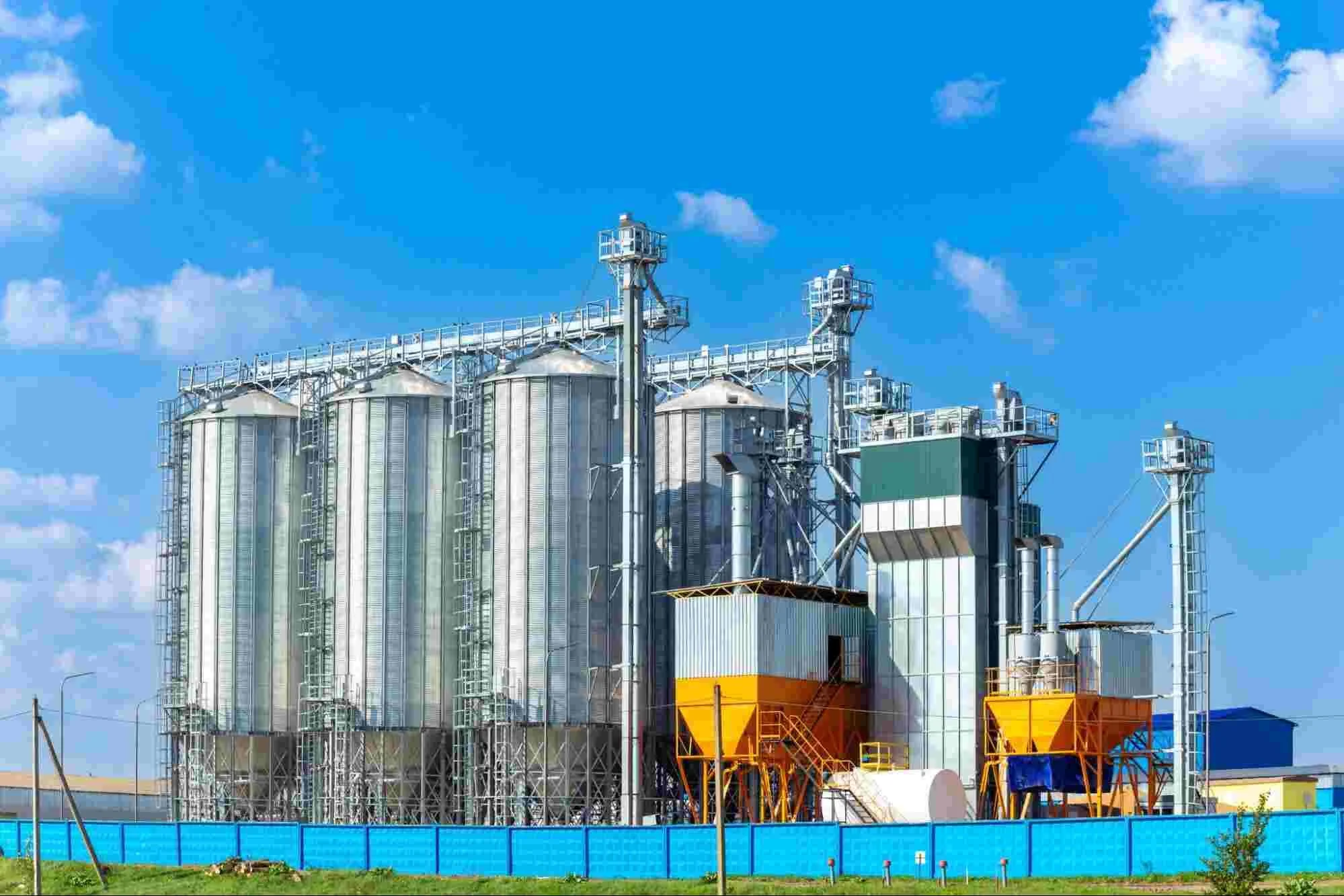
Article Overview:
This article explains how mixed flow grain dryers operate, how their airflow and heat distribution differ from other drying methods, and what producers should consider when evaluating drying performance, grain quality, and system efficiency.
What Are Mixed Flow Grain Dryers?
Mixed flow grain dryers are continuous flow dryers designed to move heated air through grain using internal ducting rather than relying only on perforated screens along the sides of the grain column. As grain flows through the dryer, air and heat are distributed through a series of ducts positioned within the grain mass.
This design helps create more even exposure to airflow and heat. Instead of pushing air from one side through a screened column, mixed flow dryers direct air through the grain from multiple points. This can support more uniform drying, especially when grain enters the dryer at higher moisture levels.
Mixed flow dryers are often described as screenless because they do not depend on external perforated screens in the same way screen-type dryers do. This can reduce certain maintenance concerns, limit debris buildup in screen areas, and support drying performance across a range of crop conditions.
How Mixed Flow Grain Dryers Move Air And Heat
The main difference between mixed flow grain dryers and many screen-type dryers is how air travels through the grain. In a screen-type dryer, heated air typically moves through perforated screens and across the grain column. This provides reliable drying and straightforward operation, but airflow can be more dependent on screen condition, grain cleanliness, and how evenly the grain column is loaded.
Mixed flow grain dryers use internal air ducts to move heated air through the grain more evenly. Air enters and exits through ductwork positioned throughout the column, creating a more balanced drying pattern. This helps reduce uneven drying and supports better moisture consistency as grain moves through the system.
External heat chambers can also support more even temperature distribution while reducing direct fire risk within the grain column. This matters when drying wetter grain, where higher moisture removal and longer drying demand can put added pressure on the system.
The result is a dryer design focused on consistent airflow, controlled heat application, and grain quality protection.
Where Mixed Flow Dryers Fit Best
Mixed flow grain dryers are often a strong fit for operations that handle high volumes, variable moisture levels, and demanding drying conditions. They are especially useful where producers want to maintain grain quality while drying wetter grain efficiently.
For farms that regularly dry high-moisture crops or need dependable drying capacity through narrow harvest windows, mixed flow technology can provide practical advantages. The more even airflow pattern can help reduce the risk of overdried and underdried pockets, supporting more consistent final moisture levels.
Mixed flow dryers may also be a good fit for operations that want to reduce certain screen-related maintenance issues. Because they use internal ducting rather than relying on perforated screens along the grain column, there may be fewer concerns around screen plugging or crop material collecting on screen surfaces.
However, the right fit still depends on the full system. Dryer type should be evaluated alongside handling capacity, storage layout, airflow strategy, fuel availability, electrical service, automation, and long-term growth plans.
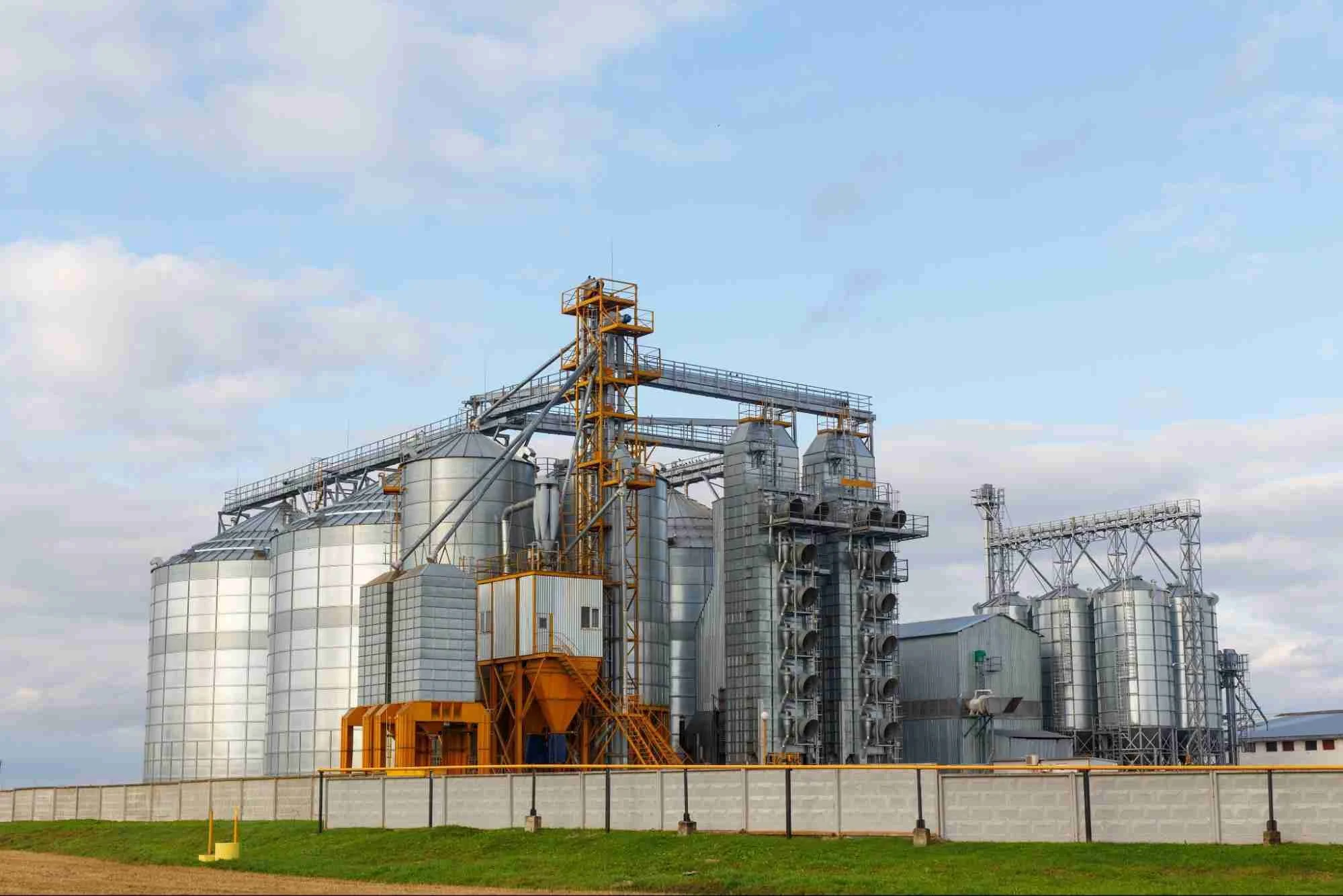
Mixed flow grain dryers integrated with grain storage silos at a large agricultural facility, providing efficient drying, conditioning, and storage for harvested grain.
Key Benefits Of Mixed Flow Grain Dryers
For many larger farms, mixed flow grain dryers are considered because they support drying performance and grain quality under conditions where consistency is important. The benefits are most noticeable when the dryer is properly sized and integrated into the full grain handling system.
Important advantages include:
More even air and heat distribution through the grain column
Stronger grain quality retention in wetter drying conditions
Better support for bushel weight compared with harsher drying approaches
Reduced fire risk through external heat chamber design
Less reliance on perforated screens, which can reduce certain plugging concerns
Consistent moisture removal when matched to the right crop and harvest pace
Efficient unloading options such as a 10-inch U-trough unloader or drag conveyor
These benefits are not automatic. They depend on proper sizing, setup, airflow design, heat management, and integration with the rest of the operation.
Mixed Flow Vs Screen-Type Dryers
Screen-type continuous flow dryers remain a reliable option for many farms. They use perforated screens to move heated air through the grain column, providing straightforward operation and consistent moisture removal across a wide range of conditions.
Mixed flow dryers take a different approach by using internal ducting and external heat chambers to distribute air and heat more evenly through the grain. This can help maintain bushel weight and grain quality in wetter drying conditions compared with screen-type or belt-type dryers.
The choice is not always about which dryer is better overall. It is about which dryer fits the operation. Screen-type dryers can work well for producers who need proven performance and simpler operation. Mixed flow dryers may be better suited for operations that regularly manage wetter grain, prioritize drying uniformity, and need a system designed around quality retention and efficient throughput.
Producers should compare dryer options based on real field conditions, not only rated capacity. Incoming moisture, target moisture, fuel use, crop type, maintenance requirements, and downstream storage all affect how the dryer performs.
Why System Integration Is Important
A mixed flow dryer can only perform as well as the system around it. If the receiving capacity is too low, the dryer may sit idle. If unloading equipment is undersized, dried grain cannot move efficiently. If storage capacity after drying is limited, harvest flow can still slow down.
Drying also needs to connect with long-term grain management. Once grain leaves the dryer, it still needs proper cooling, aeration, monitoring, and storage control. Without those pieces in place, quality risks can continue even after moisture has been reduced.
For Western Canadian operations, integration is especially important because harvest conditions can change quickly. A drying system should be designed around the way grain moves through the yard, from receiving and drying to storage, conditioning, monitoring, and final unload.
For a broader look at dryer capacity, throughput, and large-scale system planning, read our guide to Commercial Grain Dryers: What Large Operations Need To Know.
What Producers Should Consider Before Choosing A Mixed Flow Dryer
Before investing in a mixed flow dryer, producers should look beyond the dryer itself. The decision should include harvest pace, crop mix, storage capacity, handling equipment, fuel supply, electrical requirements, and long-term expansion plans.
It is also important to consider how often the operation handles wetter grain and how much value is placed on drying uniformity, bushel weight, and quality retention. For some farms, mixed flow grain dryers may provide a strong return by supporting better grain condition through difficult drying seasons. For others, a different drying method may be a better practical fit.
The best decision comes from matching dryer performance to real operating demands.
Maintenance And Seasonal Care For Mixed Flow Grain Dryers
Because mixed flow grain dryers rely on internal ducting rather than external screens, day-to-day upkeep looks a little different than with screen-type systems. Ducts still need periodic inspection for fines and debris buildup, even though the screenless design reduces some of the plugging issues that come with perforated screens. A short pre-season check of ductwork, burners, and fan bearings goes a long way toward avoiding downtime once harvest pressure builds.
Moisture sensors and control systems on mixed flow grain dryers also benefit from a calibration check before the season starts, since consistent readings are what allow the even airflow pattern to translate into even drying results. At the end of the season, clearing residual grain and fines from the ducting and heat chamber helps prevent corrosion and keeps the system ready for a fast restart the following year. Producers who build a simple seasonal maintenance routine around startup, mid-season checks, and shutdown tend to get more consistent performance and a longer service life out of their dryer.
Do Mixed Flow Grain Dryers Cost More To Operate Than Screen-Type Dryers?
Operating cost depends more on fuel type, throughput, and how well the dryer is sized to the operation than on the drying method itself. Some producers see efficiency gains from more even heat distribution, but the real comparison should be made against actual harvest volumes and moisture conditions rather than dryer type alone.
How Long Can A Mixed Flow Grain Dryer Last With Proper Care?
With regular inspection of ducting, burners, and moving parts, a well-maintained mixed flow dryer can provide many years of reliable service. Longevity comes down less to the drying technology itself and more to how consistently the system is maintained between seasons.
Build A Drying System That Fits The Full Operation
Mixed flow grain dryers can be a strong choice for producers who need uniform drying, quality protection, and reliable performance in wetter conditions. Their internal ducting, even heat distribution, and screenless design make them a practical option for operations focused on long-term drying efficiency and grain value.
Wall Grain designs grain drying systems around the realities of Western Canadian farming. If you are comparing mixed flow grain dryers or planning a dryer upgrade, contact Wall Grain to build a drying system that fits your harvest pace, storage strategy, and long-term grain management goals.