
Scalable Grain Storage Systems: How To Grow Without Rebuilding
Article Overview:
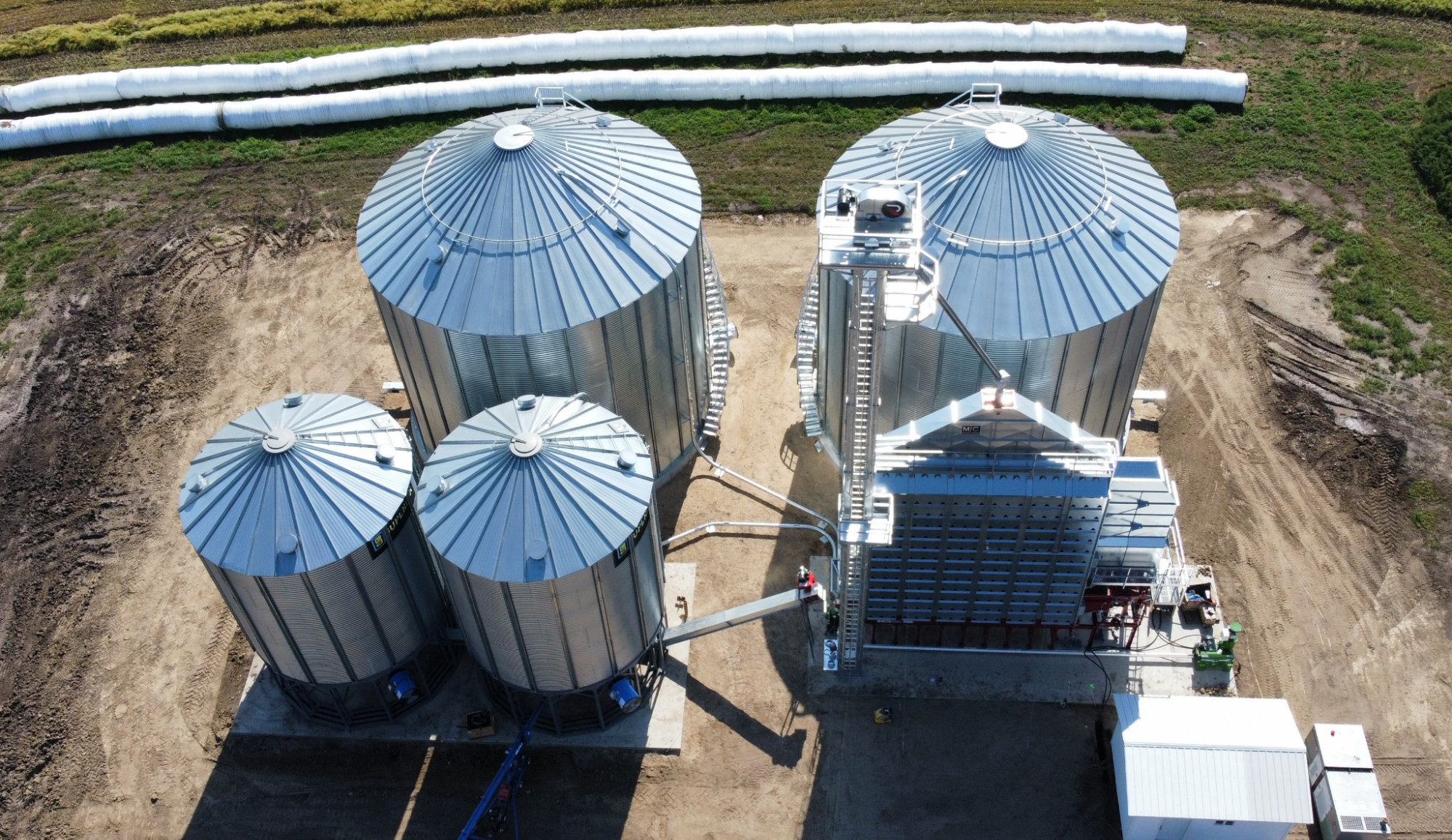
As farm operations across Western Canada continue to expand, grain storage systems must grow with them. Rebuilding storage infrastructure every time acreage or yield increases is costly and disruptive. This article explains how grain storage system scalability supports long-term growth, why modular planning matters, and how long term grain storage containers can be designed to expand efficiently without compromising performance or grain quality.
What Does Grain Storage System Scalability Mean?
Grain storage system scalability refers to the ability of a storage setup to expand in capacity and capability without requiring a complete redesign or replacement. A scalable system allows producers to add bins, handling capacity, aeration, and monitoring as their operation grows. This approach protects initial investments and reduces future capital costs.
For Western Canadian producers, scalability is especially important. Yield variability, changing crop mixes, and market opportunities often drive rapid increases in storage demand. A well planned system provides flexibility to respond to these changes while maintaining consistent storage performance.
Why Is Scalability Critical For Long Term Grain Storage?
Long term grain storage containers must support stable conditions across extended storage periods. As storage volume increases, maintaining uniform temperature, airflow, and monitoring becomes more complex. Systems that were not designed with scalability in mind often struggle to maintain performance as bins are added or repurposed.
Scalable systems allow producers to maintain consistent storage practices across all bins. This includes proper aeration, monitoring, and access. Without scalability, farms may rely on temporary or mismatched solutions that increase spoilage risk and reduce overall efficiency.
How Do Modular Grain Storage Systems Support Expansion?
Modular design is the foundation of scalable grain storage. Modular systems allow producers to start with a core set of bins and expand in stages. Additional bins can be added using standardized components, shared foundations where appropriate, and coordinated layouts that support future growth.
Westeel grain bins are commonly used in scalable designs because they offer consistent sizing options, compatible accessories, and structural designs that support expansion. Standardized bin diameters, aeration floors, and roof designs make it easier to integrate new storage without disrupting existing infrastructure.
How Should Site Layout Be Planned For Future Growth?
Scalability begins with proper site planning. Yard layout, bin spacing, and access points all affect how easily a system can expand. Leaving room for future bins, dryers, and conveying equipment reduces the need for costly relocation or demolition later.
A scalable layout considers truck traffic flow, equipment clearance, and service access. Bins should be positioned to allow additional storage to be added without blocking aeration fans or limiting loadout options. Planning for expansion at the design stage prevents operational bottlenecks as capacity increases.
How Do Aeration And Monitoring Scale With Storage Growth?
As more long term grain storage containers are added, aeration and monitoring systems must scale alongside them. Uniform airflow and consistent temperature management are critical for preventing moisture migration and spoilage across multiple bins.
Monitoring systems allow producers to manage increasing storage volume without increasing manual checks. Temperature and moisture sensors provide real time insight into each bin, helping operators maintain stable conditions as the system grows. Advanced systems can also support automated fan control, reducing labour demands while maintaining storage performance.
Storage scalability works best when drying capacity is planned alongside it. To better understand how different drying approaches impact storage performance and expansion planning, read our article: Grain Dryer Types Explained: Choosing The Drying Method That Fits Your Farm.
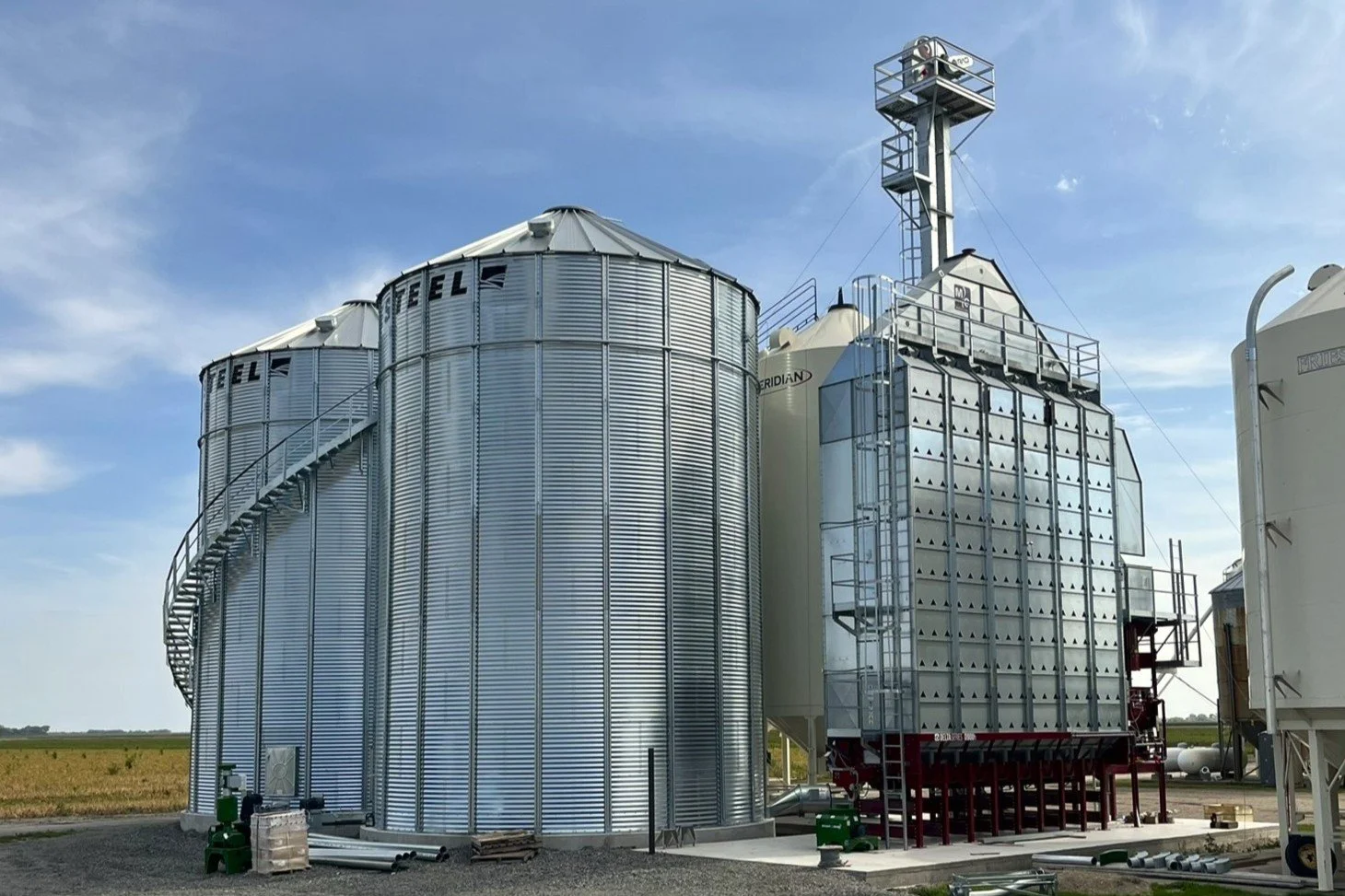
High-capacity grain storage system scalability demonstrated by a cluster of corrugated metal silos and an industrial grain drying tower on a modern agricultural site.
Why Does Installation Quality Matter In Scalable Systems?
Installation quality becomes even more important as systems expand. Poorly installed aeration floors, fans, or sensors can create uneven airflow that worsens as capacity increases. Proper installation ensures each bin performs as intended and integrates smoothly with the rest of the system.
Experienced installation teams also help ensure that new bins match existing infrastructure. Consistent foundation alignment, fan sizing, and sensor placement allow the expanded system to operate as a unified whole rather than a collection of separate components.
What Role Does Handling Equipment Play In Scalability?
Grain handling systems must scale with storage capacity. As bins are added, conveying systems must handle higher volumes without creating bottlenecks. Planning for scalable handling equipment allows producers to increase throughput without replacing major components.
Integrated handling systems support smoother expansion by maintaining consistent flow rates between bins, dryers, and loadout points. When storage and handling are planned together, farms avoid situations where added capacity cannot be used efficiently due to limited movement capability.
How Can Producers Avoid Common Scalability Mistakes?
Scalability challenges often arise when systems are expanded without a long-term plan. Adding bins without considering airflow, monitoring, or handling capacity can create inefficiencies that are difficult to correct later.
Producers can avoid these issues by focusing on:
Planning bin layouts with future expansion in mind
Choosing standardized long term grain storage containers
Scaling aeration and monitoring systems alongside capacity
Matching handling equipment to future throughput needs
Working with experienced system designers and installers
These steps help ensure that growth strengthens the system rather than introducing new risks.
Why Do Scalable Systems Support Better Long Term Performance?
Scalable grain storage systems support consistent performance across changing operational demands. When storage, aeration, monitoring, and handling are designed to grow together, producers maintain control over grain quality regardless of volume.
This approach reduces downtime, protects grade, and extends the useful life of storage infrastructure. For Western Canadian farms managing large harvests and long storage periods, scalability is essential for sustainable growth.
How Can Producers Build A Storage System That Grows With Them?
Building a scalable grain storage system starts with understanding future needs. While it is not always possible to predict exact growth, designing for expansion ensures flexibility. Durable bins, modular layouts, and integrated systems create a foundation that adapts as operations evolve.
If you’re planning to expand storage capacity and want to maintain consistent grain conditions across more bins, our article How Automated Grain Management Systems Are Changing On-Farm Storage explores how automation supports long-term performance as systems grow.
To learn more about building a grain storage system that can expand without costly rebuilds, contact Wallgrain Handling Systems for guidance on planning scalable, long-term storage solutions.