
Air Grain Handling Systems: Improving Flow and Reducing Damage
Article Overview:
Air grain handling systems use controlled airflow to move grain through enclosed tubing instead of relying entirely on traditional mechanical conveying equipment. These systems are designed to support efficient grain movement while reducing kernel damage, dust exposure, and unnecessary handling stress. This article explains how air grain handling systems work, how they compare to mechanical conveying systems, and where they fit best within modern grain handling operations focused on efficiency and grain quality.
How Do Air Grain Handling Systems Work?
Air grain handling systems move grain using airflow generated by high-pressure fans or vacuum systems. Instead of transferring grain through augers or chains, the grain travels through enclosed tubing while suspended within the moving air stream.
Because the grain is carried through airflow rather than constantly pushed or dragged through mechanical components, handling can be gentler under the right operating conditions. These systems are commonly used in operations where grain quality preservation and flexible routing are priorities.
Air systems may be used to transfer grain between bins, dryers, trucks, or other handling points as part of a larger integrated grain handling setup.
How Air Grain Handling Systems Compare to Mechanical Conveying
Air systems and mechanical systems both move grain efficiently, but they do so in very different ways.
| Feature | Air Grain Handling Systems | Mechanical Conveying Systems |
|---|---|---|
| Grain Movement | Airflow-driven transfer | Augers, chains, or belts |
| Grain Contact | Reduced direct mechanical contact | Continuous mechanical contact |
| Grain Damage Potential | Lower under controlled operation | Higher risk of cracking and fines |
| Dust Exposure | Enclosed handling environment | More exposed transfer points |
| Routing Flexibility | Flexible tubing layouts | More fixed equipment paths |
| Equipment Wear | Fewer direct-contact moving parts | More wear components |
| Best Fit | Grain quality and flexible layouts | High-capacity continuous movement |
The right choice depends on handling goals, grain volumes, transfer distances, and how the entire system is designed to operate.
Why Grain Damage During Handling Matters
Handling damage can affect more than grain appearance. Cracked kernels and fines may reduce crop value, interfere with airflow inside storage bins, and create additional spoilage risks during long-term storage.
Aggressive mechanical transfer systems can increase the likelihood of grain damage, especially when handling dry grain or moving grain repeatedly through multiple transfer points.
Air grain handling systems help reduce some of this stress by limiting direct contact between the grain and moving mechanical components during transfer. This can help maintain grain quality and reduce handling-related loss across the system.
Where Air Grain Handling Systems Fit Best
Air systems are often best suited for operations focused on grain quality preservation, flexible handling layouts, and enclosed grain movement.
These systems are commonly used where:
grain damage reduction is a priority
transfer routing requires flexibility
cleaner handling conditions are important
multiple storage points need to connect efficiently
grain handling integrates closely with drying and storage systems
Because air systems use enclosed transfer lines, they can also help simplify grain movement across more complex storage layouts.
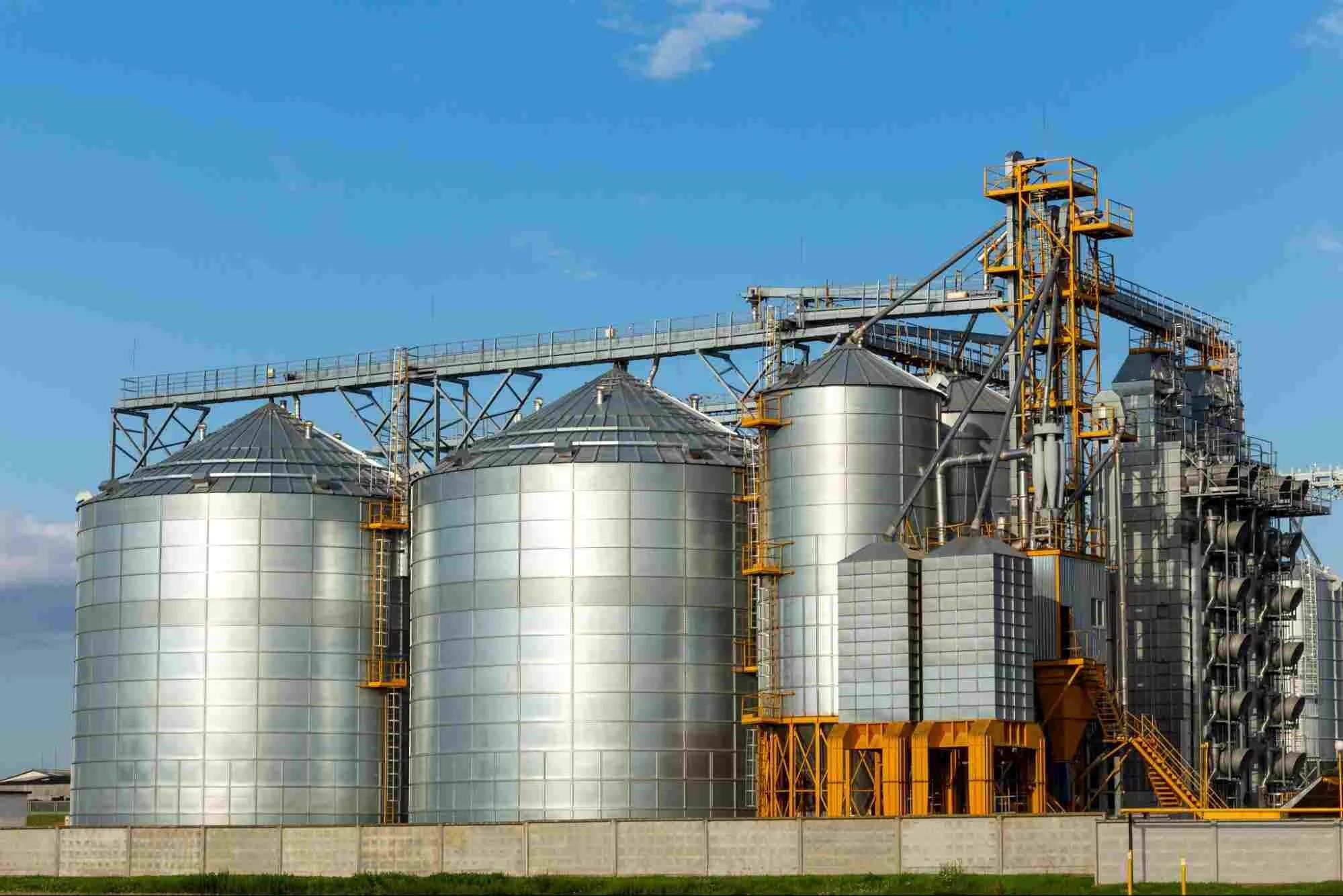
Large commercial grain storage facility with integrated air grain handling systems designed for efficient grain flow, enclosed transfer, and reduced grain damage during storage operations.
How Air Systems Support Cleaner and More Efficient Flow
Open transfer points and exposed conveyors can create additional dust and cleanup requirements during harvest and storage operations.
Air grain handling systems reduce exposed grain movement by transferring grain through enclosed tubing. This may help reduce dust around handling areas while improving overall containment during transfer.
The enclosed design can also support smoother grain movement across the system when layouts require multiple routing options between storage, drying, and unloading points.
Why System Design Still Important
Even efficient handling equipment performs best when it is integrated properly into the full grain handling system.
Air grain handling systems should be planned alongside storage capacity, drying systems, unloading requirements, and future expansion goals. Poorly integrated layouts can still create unnecessary handling, slow grain movement, or operational inefficiencies regardless of the conveying method used.
Strong grain handling systems focus on how grain flows through the entire operation rather than how individual equipment pieces perform independently.
What Producers Should Consider Before Choosing an Air System
Air grain handling systems offer important advantages, but they are not the right solution for every operation.
Storage layout, transfer distances, crop types, throughput requirements, and future expansion plans all influence whether an air system makes sense within the overall grain handling strategy.
Operations should also consider how the system will integrate with existing storage, drying, and monitoring infrastructure to support efficient long-term operation.
The best handling systems are designed around the needs of the operation, not around a single equipment type.
Building Grain Handling Systems Around Flow and Grain Quality
Efficient grain handling is not only about moving grain quickly. It is about protecting grain quality, reducing unnecessary handling stress, and maintaining consistent flow across the operation.
Air grain handling systems can support these goals by improving routing flexibility, reducing direct mechanical contact, and helping maintain cleaner handling conditions throughout the system.
If you are evaluating air grain handling systems for your operation, reach out to Wall Grain to plan a grain handling system built around efficient flow, reduced grain damage, and long-term operational performance.