
What Are the Differences Between Grain Storage Silos and Bins?
Article Overview:
Grain storage silos and bins are both used to store harvested grain, but they are designed for different operating needs, storage capacities, and system layouts. Understanding how each structure functions helps producers make better decisions around storage efficiency, grain handling flow, and long-term expansion planning. This article explains the differences between grain storage silos and bins, where each is commonly used, and what producers should consider when planning a complete storage system.
How Are Grain Storage Silos and Bins Different?
The terms “silo” and “bin” are often used interchangeably, but they typically refer to different types of storage structures within grain handling systems.
Grain bins are the most common on-farm storage solution in Western Canada. They are designed to support aeration, drying integration, long-term storage, and operational flexibility. Flat bottom and hopper bottom bins are commonly used across a wide range of farm operations.
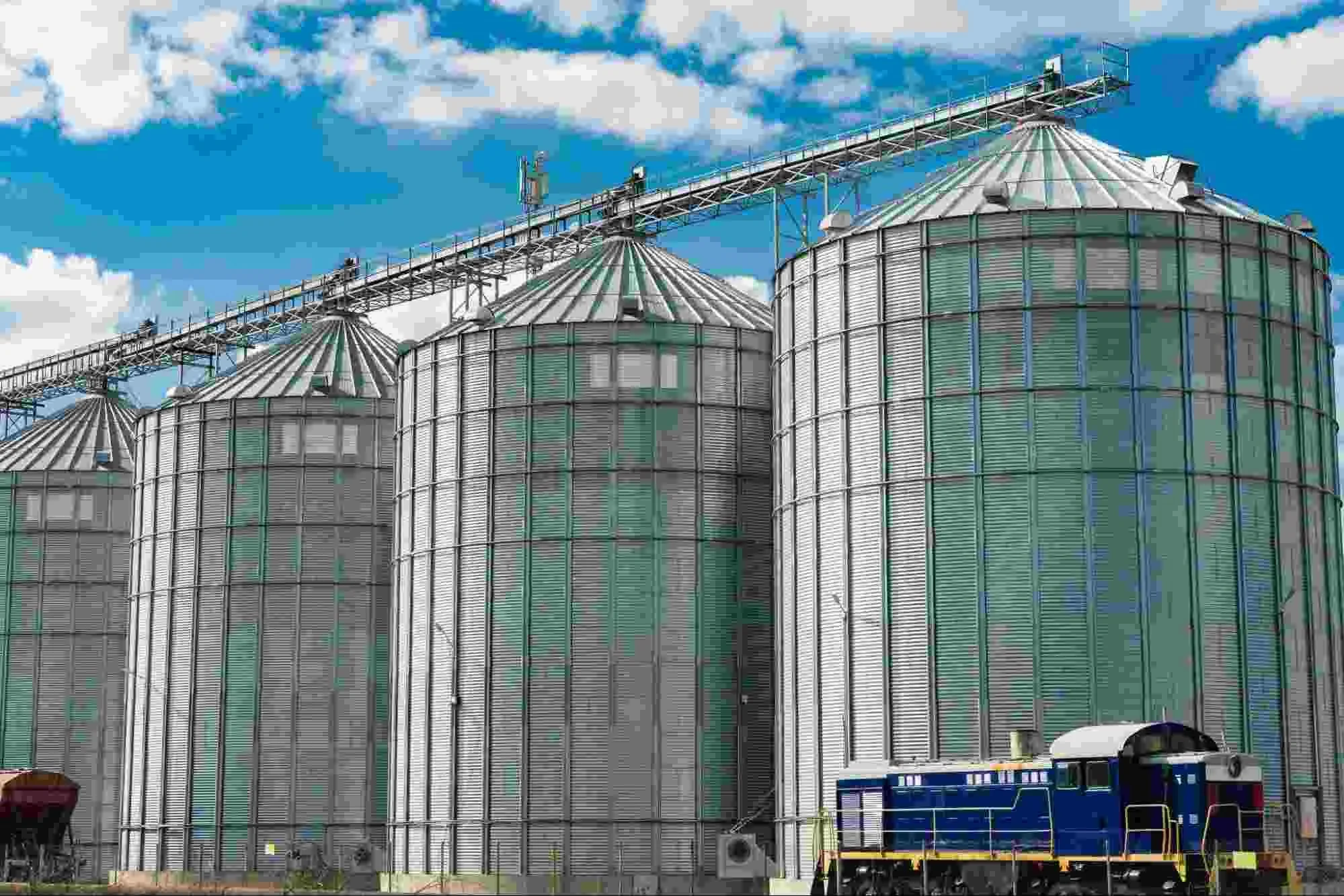
Grain silos are generally associated with taller, larger-capacity commercial storage systems built for continuous grain movement and centralized handling operations. These structures are more common in commercial facilities where throughput demands are significantly higher.
The right structure depends less on terminology and more on how the operation stores, conditions, and moves grain through the system.
Comparing Grain Storage Silos and Bins
| Feature | Grain Bins | Grain Storage Silos |
|---|---|---|
| Primary Use | On-farm grain storage | Commercial-scale grain storage |
| Typical Capacity | Small to large farm operations | High-capacity commercial facilities |
| Common Configurations | Flat bottom and hopper bottom | Tall vertical storage structures |
| Drying Integration | Commonly integrated | Less focused on integrated drying |
| Aeration Systems | Widely used | Depends on facility design |
| Grain Flow | Batch and seasonal movement | Continuous high-throughput movement |
| Expansion Flexibility | Easier phased expansion | Larger infrastructure planning required |
| Typical Operations | Farms and producer storage yards | Commercial terminals and large facilities |
When Grain Bins Make More Sense
For most farm operations, grain bins provide the flexibility needed to support harvest, drying, aeration, and long-term storage.
Bins are often easier to integrate into expanding systems because they can be added gradually as storage needs increase. They also support more flexible unloading, conditioning, and crop segregation compared to larger centralized systems.
Flat bottom bins are commonly used for higher-capacity long-term storage, while hopper bins support faster unloading and operational flexibility. Smooth wall bins may also be used in certain operations where specific handling or storage requirements exist.
For many Western Canadian producers, grain bins provide the best balance between storage capacity, airflow management, and operational efficiency.
When Grain Storage Silos Are Typically Used
Grain storage silos are usually designed for operations handling very large grain volumes where continuous movement through the system is required.
These systems are often part of commercial grain facilities that rely on centralized handling infrastructure, higher throughput, and large-scale transfer operations. Because of their size and handling requirements, silo systems generally involve more advanced planning around grain flow, site layout, and supporting infrastructure.
Operations moving grain continuously throughout the year may benefit from silo-style systems, particularly when storage and handling volumes exceed what standard farm bin systems are designed to manage efficiently.
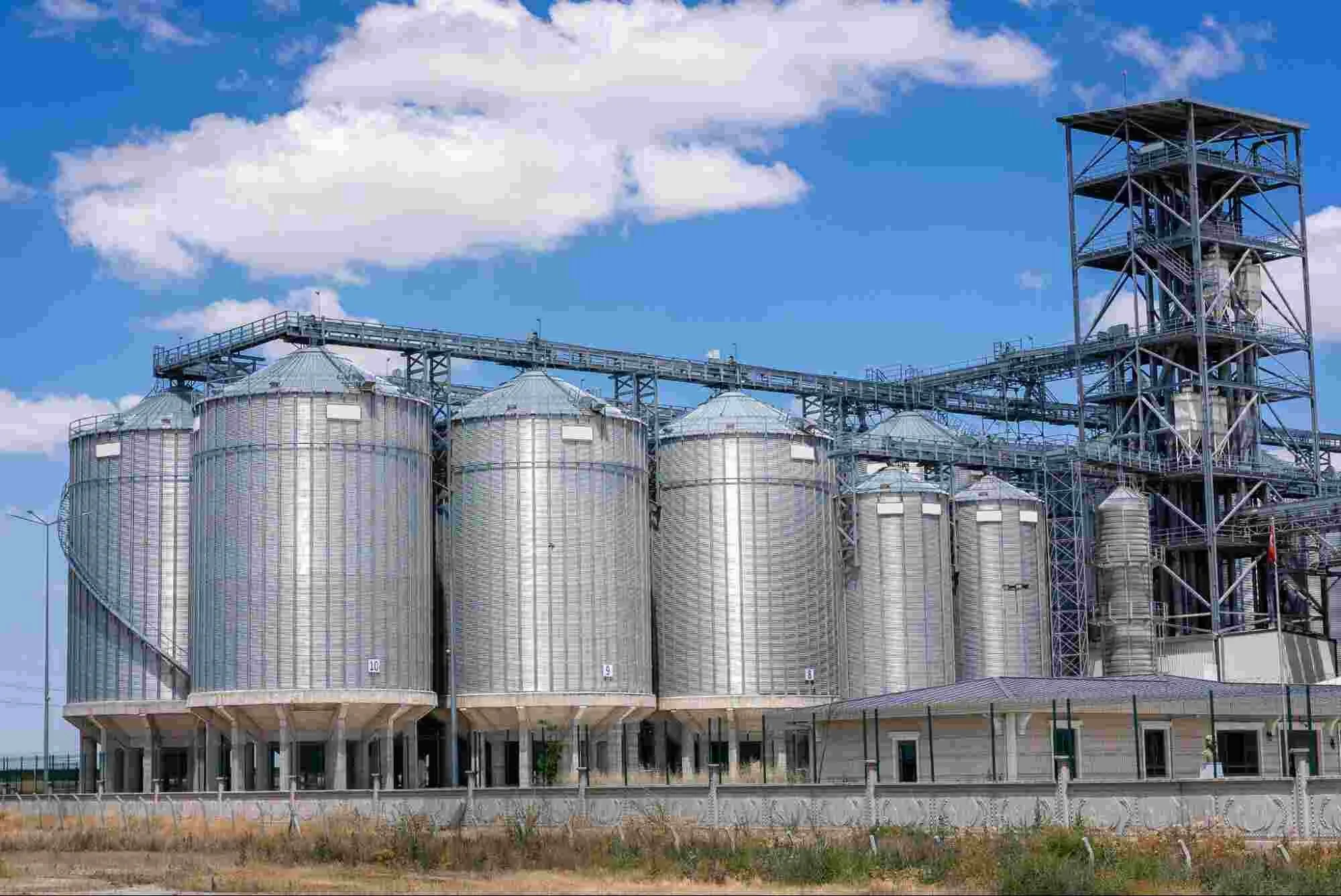
Commercial grain storage silos connected by integrated grain handling infrastructure, commonly used for high-capacity grain storage and continuous grain movement operations.
Why System Design Matters More Than Structure Type
Choosing between grain storage silos and bins is only one part of planning a storage system. Overall performance depends on how well storage integrates with drying, airflow, handling, and monitoring systems.
A poorly integrated system can create unnecessary grain transfers, slow unloading, uneven airflow, and reduced conditioning efficiency. Even large storage capacity becomes less effective if grain movement and conditioning are not properly coordinated.
Well-planned systems improve operational flow, support more consistent grain conditioning, and allow storage infrastructure to perform efficiently through harvest and long-term storage periods.
How Airflow and Conditioning Affect Storage Performance
Airflow remains one of the most important factors in grain storage performance regardless of structure type.
Without consistent airflow, temperature and moisture conditions inside the grain mass can become unstable. This increases the risk of hotspots, spoilage, shrink loss, and reduced grain quality over time.
Storage systems should always be planned alongside fan sizing, floor systems, conditioning strategy, unloading design, and monitoring systems. These components work together to maintain stable grain conditions throughout storage.
Planning Storage Around Future Growth
Storage systems should support long-term expansion, not only current capacity needs.
As operations grow, additional bins, handling equipment, or drying systems may need to be integrated into the existing setup. Systems that are not planned with future growth in mind can become difficult and expensive to expand efficiently later.
Producers planning new storage infrastructure should consider:
future capacity requirements
available expansion space
integration with future handling systems
how grain flow may change as throughput increases
long-term conditioning and monitoring needs
Planning ahead helps create a storage system that remains efficient as operational demands change over time.
Building the Right Storage System for Your Operation
The best storage solution depends on harvest demands, storage goals, grain handling requirements, and future growth plans.
For many farms, grain bins provide the flexibility and system integration needed for efficient on-farm storage. Commercial operations with continuous high-volume handling may require silo-style systems designed for larger throughput demands.
If you are evaluating grain storage silos and bins for your operation, contact Wall Grain to plan a storage system built around efficient grain flow, reliable conditioning, and long-term performance.